
A Uganda Rwanda birdwatching safari is one of Africa’s most rewarding birding experiences—and one of its most underrated. Together, the two countries hold over 1,000 recorded bird species, including more than 40 Albertine Rift endemics found nowhere else on Earth. Uganda alone has over 1,080 species, while Rwanda adds a further 700-plus, with significant overlap but also distinct specialities. From the papyrus swamps of Lake Victoria and the savannah of Queen Elizabeth to the ancient rainforest of Nyungwe and the bamboo zone of the Virunga volcanoes, a combined birding safari offers an extraordinary range of habitats within a compact, accessible region. This guide outlines a detailed 14-day cross-border birding itinerary, with practical advice on target species, timing, guides, and how to plan a trip that maximises both species count and enjoyment.
Rwanda’s parks are managed by the Rwanda Development Board (RDB), and Uganda’s by the Uganda Wildlife Authority (UWA). Both countries are part of the East African Tourist Visa scheme. For a Rwanda-only birding itinerary, see our Rwanda birdwatching safari itinerary. For a broader combined wildlife trip, see our Uganda Rwanda combined safari itinerary 10 days.
Why Uganda Rwanda birdwatching safari?
Combining the two countries offers several advantages for birders:
- Over 1,000 species: Uganda has over 1,080 recorded species; Rwanda has over 700. Together they cover an extraordinary range of habitats.
- Albertine Rift endemics: More than 40 species are found only in the Albertine Rift, and both countries protect key sites for them.
- Diverse habitats: Papyrus swamps, savannah, montane rainforest, bamboo forest, crater lakes, and wetlands—all within a few days’ drive.
- Compact geography: Key birding sites are close together, allowing multiple habitats in a single trip.
- Shoebill stork: Uganda is one of the best places in Africa to see this prehistoric-looking bird.
- Excellent guides: Both countries have trained birding guides who know the calls, habits, and locations of sought-after species.
- Good infrastructure: Paved roads, reliable lodges, and well-managed parks make logistics straightforward.
For a comparison of birding in Rwanda’s parks, see our Rwanda birdwatching safari itinerary.
Key Birding Destinations in Uganda and Rwanda
A combined birding safari can cover a remarkable range of habitats. Here are the key destinations:
| Destination | Country | Key Species | Habitat |
|---|---|---|---|
| Mabamba Swamp | Uganda | Shoebill stork, papyrus gonolek, blue-headed coucal | Papyrus wetland |
| Lake Mburo National Park | Uganda | African finfoot, shoebill (seasonal), bare-faced go-away-bird | Savannah and wetland |
| Queen Elizabeth National Park | Uganda | Shoebill, African skimmer, papyrus gonolek, martial eagle | Savannah, wetland, crater lakes |
| Kibale Forest | Uganda | Green-breasted pitta, African pitta, black bee-eater, blue-headed sunbird | Lowland rainforest |
| Bwindi Impenetrable Forest | Uganda | Short-tailed warbler, Grauer’s warbler, Shelley’s crimsonwing, African green broadbill | Montane rainforest |
| Nyungwe Forest | Rwanda | Rwenzori turaco, Neumann’s warbler, Grauer’s swamp warbler, blue-headed sunbird | Montane rainforest |
| Volcanoes National Park | Rwanda | Rwenzori turaco, handsome francolin, Rwenzori apalis, dusky crimsonwing | Bamboo and montane forest |
| Akagera National Park | Rwanda | Shoebill (rare), papyrus gonolek, red-faced barbet, carmine bee-eater | Savannah and wetland |
At a Glance: The 14-Day Birding Safari Itinerary
| Day | Location | Birding Highlights |
|---|---|---|
| Day 1 | Entebbe (Uganda) | Arrival; Entebbe Botanical Gardens; Lake Victoria shoreline |
| Day 2 | Mabamba Swamp | Shoebill stork; papyrus endemics |
| Day 3 | Mabamba → Lake Mburo | Transfer; afternoon birding in the park |
| Day 4 | Lake Mburo National Park | African finfoot; savannah and wetland species |
| Day 5 | Lake Mburo → Queen Elizabeth | Transfer; afternoon birding in the park |
| Day 6 | Queen Elizabeth National Park | Kazinga Channel; shoebill; crater lakes |
| Day 7 | Queen Elizabeth → Kibale | Transfer; afternoon forest birding |
| Day 8 | Kibale Forest | Green-breasted pitta; forest specialists; Bigodi Wetland |
| Day 9 | Kibale → Bwindi | Transfer; afternoon birding en route |
| Day 10 | Bwindi Impenetrable Forest | Albertine Rift endemics; forest birding |
| Day 11 | Bwindi → Nyungwe (Rwanda) | Cross border; afternoon birding in Nyungwe |
| Day 12 | Nyungwe Forest | Rwenzori turaco; Grauer’s swamp warbler; canopy walkway |
| Day 13 | Nyungwe → Volcanoes National Park | Transfer; afternoon birding in the bamboo zone |
| Day 14 | Volcanoes → Kigali | Morning birding; transfer to Kigali; departure |
This route starts in Entebbe and ends in Kigali, which is the most efficient open-jaw routing for a birding safari. It covers Uganda’s key wetland and forest sites before crossing into Rwanda for the Albertine Rift endemics of Nyungwe and Volcanoes.
Days 1–2: Entebbe and Mabamba Swamp
Your birding safari begins at Entebbe International Airport. After arriving, spend the afternoon at the Entebbe Botanical Gardens and the Lake Victoria shoreline—a gentle introduction to Uganda’s birdlife. Species to look for include orange-cheeked waxbill, black-headed weaver, and various sunbirds and kingfishers. For more on arrival logistics, see our Rwanda safari from Kigali airport guide (the principles apply equally to Entebbe).
On Day 2, visit Mabamba Swamp—one of the best places in Africa to see the shoebill stork. The swamp is a papyrus wetland on the shores of Lake Victoria, and the shoebill is the headline species. You’ll also see papyrus gonolek, blue-headed coucal, and a variety of herons, egrets, and kingfishers. The best way to explore the swamp is by canoe, with a local guide who knows the shoebill’s territory.
The shoebill is a prehistoric-looking bird that can stand over a metre tall. It’s a top target for many birders, and Mabamba is one of the most reliable places to see it. Allow a full morning for the swamp, and bring binoculars, a scope if you have one, and a hat for sun protection.
Days 3–4: Lake Mburo National Park
Drive west to Lake Mburo National Park—about three to four hours from Entebbe. Lake Mburo is Uganda’s smallest savannah park, but it offers excellent birding and a refreshing change of pace. The park is home to over 350 recorded species, including the African finfoot, a shy and sought-after waterbird.
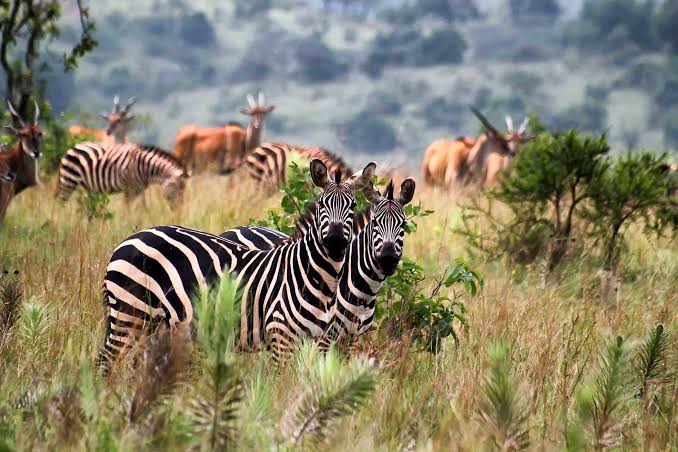
Birding in Lake Mburo is best done on a boat trip on the lake and on game drives through the acacia woodland. Species to look for include bare-faced go-away-bird, black-bellied bustard, coqui francolin, and a variety of raptors. The park is also home to zebras, impalas, and eland, making it a good place to combine birding with general wildlife viewing.
For more on Lake Mburo and other Ugandan parks, see our Akagera National Park vs Queen Elizabeth National Park guide, which discusses savannah birding across the region.
Days 5–6: Queen Elizabeth National Park
Drive to Queen Elizabeth National Park—about three to four hours from Lake Mburo. Queen Elizabeth is one of Uganda’s most important birding destinations, with over 600 recorded species across savannah, wetland, forest, and crater lake habitats.
The Kazinga Channel is the park’s birding highlight, with large concentrations of waterbirds, including hippos, crocodiles, and an extraordinary variety of herons, egrets, kingfishers, and fish eagles. A boat safari on the channel is essential. The park’s crater lakes are also productive, with species like the African skimmer, papyrus gonolek, and martial eagle.
Shoebill storks are occasionally seen in the park’s wetlands, though they are less reliable here than at Mabamba. The Ishasha sector in the south is good for savannah species, including the tree-climbing lions that the park is famous for. For a fuller picture of the park’s wildlife, see our Uganda Rwanda wildlife and culture tour.
Days 7–8: Kibale Forest
Drive to Kibale Forest National Park—about two to three hours from Queen Elizabeth. Kibale is best known for its chimpanzees, but it’s also an excellent birding destination, with over 375 recorded species, including several sought-after forest specialists.
The headline species for birders in Kibale is the green-breasted pitta—a stunning, elusive bird that is one of Uganda’s most sought-after species. Other targets include the African pitta, black bee-eater, blue-headed sunbird, and a variety of forest-dwelling weavers and waxbills. The Bigodi Wetland Sanctuary, a community-run project near Kibale, is also excellent for birding, with species like the papyrus gonolek and the great blue turaco.
Birding in Kibale is best done early in the morning, before the forest gets too hot and the birds become less active. A local birding guide is essential—they know the calls and territories of the park’s specialities.
Days 9–10: Bwindi Impenetrable Forest
Drive to Bwindi Impenetrable National Park—about four to five hours from Kibale. Bwindi is one of Africa’s most important birding destinations, with over 350 recorded species, including 23 Albertine Rift endemics.
Target species in Bwindi include the short-tailed warbler, Grauer’s warbler, Shelley’s crimsonwing, and the extraordinary African green broadbill—a small, bright green bird that is one of the Albertine Rift’s most sought-after species. The forest is dense and the birding is challenging, but the rewards are exceptional.
Birding in Bwindi is best done along the park’s trails, particularly the waterfall trail and the Mubwindi Swamp trail, which is good for Grauer’s swamp warbler and other wetland species. A local birding guide is essential, as many species are heard more often than seen.
For more on Bwindi’s wildlife, see our Uganda Rwanda primate safari itinerary.
Days 11–12: Nyungwe Forest
Cross from Uganda into Rwanda at Cyanika or Gatuna, then drive to Nyungwe Forest National Park—about five to six hours from Bwindi. Nyungwe is one of Africa’s oldest rainforests and Rwanda’s premier birding destination, with over 300 recorded species, including 27 Albertine Rift endemics.
Target species in Nyungwe include the Rwenzori turaco, Neumann’s warbler, Grauer’s swamp warbler, blue-headed sunbird, and the Rwenzori batis. The park’s trails offer access to some of Africa’s most sought-after species, and the canopy walkway provides a unique perspective on canopy-dwelling birds.
Birding in Nyungwe is best done early in the morning, and a local guide is essential. The park’s high altitude and dense vegetation make birding challenging, but the rewards are exceptional. For a detailed Rwanda-only birding guide, see our Rwanda birdwatching safari itinerary. For the canopy walkway, see our Nyungwe Forest canopy walk guide.
Days 13–14: Volcanoes National Park and Kigali
Drive from Nyungwe to Volcanoes National Park—about five to six hours, passing through Kigali or along the shores of Lake Kivu. Volcanoes National Park is best known for gorillas, but it’s also a good birding destination, with over 200 recorded species, including several Albertine Rift endemics.
Target species in Volcanoes include the Rwenzori turaco, handsome francolin, Rwenzori apalis, and the rare dusky crimsonwing. The bamboo zone is particularly good for birding, and the park’s trails offer access to some of Rwanda’s most sought-after species.
On Day 14, spend the morning birding in the bamboo zone, then transfer to Kigali for your departure flight. If time allows, stop at the Ellen DeGeneres Campus of the Dian Fossey Gorilla Fund, which has good birding in its gardens. For more on the area, see our Things to Do in Musanze Rwanda.
Target Species by Destination
Here’s a summary of the key target species for each destination:
| Destination | Key Target Species |
|---|---|
| Mabamba Swamp | Shoebill stork, papyrus gonolek, blue-headed coucal, lesser jacana |
| Lake Mburo | African finfoot, bare-faced go-away-bird, coqui francolin, black-bellied bustard |
| Queen Elizabeth | Shoebill (occasional), African skimmer, papyrus gonolek, martial eagle, fish eagle |
| Kibale Forest | Green-breasted pitta, African pitta, black bee-eater, blue-headed sunbird |
| Bwindi Impenetrable Forest | Short-tailed warbler, Grauer’s warbler, Shelley’s crimsonwing, African green broadbill |
| Nyungwe Forest | Rwenzori turaco, Neumann’s warbler, Grauer’s swamp warbler, Rwenzori batis |
| Volcanoes National Park | Rwenzori turaco, handsome francolin, Rwenzori apalis, dusky crimsonwing |
Best Time for a Uganda-Rwanda Birding Safari
Both countries have similar seasonal patterns, and the best time for birding depends on your priorities:
- March to May (long rainy season): Excellent for birding, as migratory species arrive and resident birds are in breeding plumage and vocal. The forest is lush and active. Trails can be muddy.
- October to November (short rainy season): Similar to March–May but shorter. A good time for birding.
- June to September (long dry season): Good for birding, but some species are less vocal and harder to find. The weather is more comfortable for walking.
- December to February (short dry season): Good conditions, with fewer crowds than June–September.
For serious birders, the rainy seasons are often the best time, as birds are more active and vocal. However, be prepared for muddy trails and afternoon showers. For a deeper dive into wet-weather travel, see our Rwanda rainy season safari planning guide.
Birding Guides and Permits
Hiring a knowledgeable birding guide is essential for a successful birding safari in Uganda and Rwanda. Guides know the calls, habits, and locations of the region’s most sought-after species and can help you spot birds that would be impossible to find on your own.
Birding permits are required for entry to national parks and are issued by the relevant wildlife authority—the RDB in Rwanda and the UWA in Uganda. These can be arranged through your tour operator. For current rates and booking procedures, visit the Rwanda Development Board and the Uganda Wildlife Authority.
Some birding activities, such as the Nyungwe canopy walkway and boat safaris on Lake Mburo and the Kazinga Channel, require separate permits or fees. Your operator will handle these as part of your package.
What to Pack for a Birding Safari
- Binoculars: Essential for birding. Bring a good pair with a magnification of 8x or 10x.
- Spotting scope: Optional but useful for waterbirds and distant species.
- Field guide: A good field guide to the birds of East Africa.
- Camera: A camera with a zoom lens for photographing birds.
- Clothing: Neutral-coloured layers, long-sleeved shirts, long trousers, a waterproof jacket, and sturdy hiking boots.
- Accessories: Sun hat, sunglasses, sunscreen, insect repellent, and a small daypack.
- Other: Reusable water bottle, energy snacks, notebook and pen for recording sightings, and a universal power adapter (Rwanda uses Type C and J; Uganda uses Type G).
Dress in layers, as temperatures can vary throughout the day. The forest can be cool and damp, so a waterproof jacket is essential.
Health and Safety for Birding Safaris
- Malaria: Both Rwanda and Uganda are malaria-risk countries. Antimalarial medication is recommended—consult your doctor before travel.
- Yellow fever: A certificate is required for entry to both countries if arriving from a country with yellow fever transmission.
- Altitude: Nyungwe, Bwindi, and Volcanoes are at high altitude. Take it easy on the first day and stay hydrated.
- Water: Drink bottled or purified water only.
- Travel insurance: Comprehensive insurance covering medical evacuation is strongly recommended.
- Wildlife safety: Always follow your guide’s instructions. Keep a safe distance from animals and never feed them.
For the latest entry requirements, visit the Rwanda Directorate General of Immigration and Emigration and Uganda’s Directorate of Citizenship and Immigration Control.
Frequently Asked Questions
How many bird species can I see on a combined Uganda-Rwanda birding safari?
With a two-week itinerary covering multiple habitats, it’s realistic to see 300–400 species, depending on the season, effort, and luck. Serious listers can see more.
What is the best time for birding in Uganda and Rwanda?
The rainy seasons—March to May and October to November—are generally best, as migratory species arrive and resident birds are in breeding plumage and vocal. However, birding is rewarding year-round.
Do I need a specialist birding guide?
Yes, highly recommended. A specialist birding guide knows the calls, habits, and locations of the region’s most sought-after species and can help you spot birds that would be impossible to find on your own.
Can I see the shoebill stork on this itinerary?
Yes. Mabamba Swamp is one of the most reliable places in Africa to see the shoebill, and it’s included in this itinerary. Shoebills are also occasionally seen in Queen Elizabeth National Park.
Can I combine birding with gorilla trekking?
Yes. Many birders add gorilla trekking to their itinerary, and this 14-day route passes through both Volcanoes National Park and Bwindi Impenetrable Forest, where gorilla trekking is available. For a combined primate and birding trip, see our Uganda Rwanda primate safari itinerary.
Is this itinerary suitable for families?
Birding is a family-friendly activity, and many of the destinations on this itinerary—Mabamba Swamp, Lake Mburo, Queen Elizabeth—are suitable for children. Gorilla and chimpanzee trekking have a minimum age of 15, but the birding itself is open to all ages.
Start Planning Your Birding Safari
Every birding safari we create is tailored to your interests, budget, and travel dates. Whether you’re a serious lister chasing Albertine Rift endemics or a casual birder hoping to see a shoebill, we’ll design a combined itinerary that fits.
Contact us today to begin planning your Uganda-Rwanda birdwatching safari.