Last updated: 26 September 2026. Rates and availability are set by UWA and subject to change — confirm before booking.
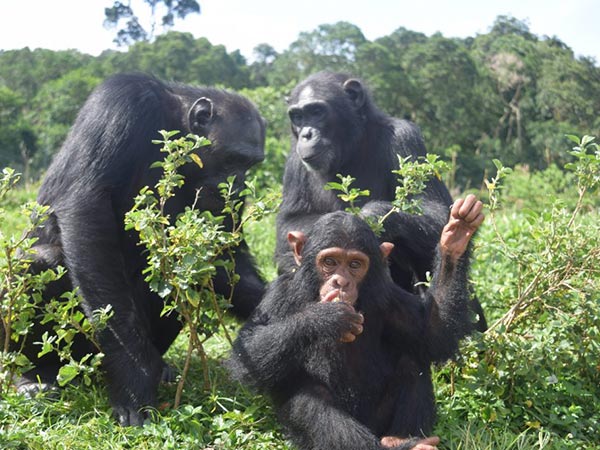
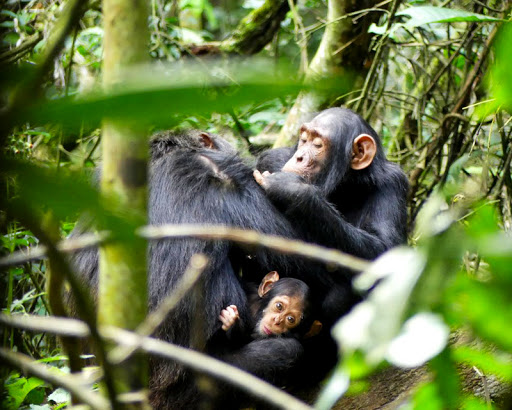
Short answer: Chimpanzee trekking with kids only works if every trekker is 15 or older on the trekking day. That rule is set by the Uganda Wildlife Authority and enforced at booking and at the trailhead. Families with children under 15 need to plan a split-day: one parent treks with the older children, the other stays with the younger children on a family-friendly alternative. Uganda has several excellent non-trek activities that suit younger children — the Bigodi Wetland Sanctuary walk, the Kibale night forest walk, Ngamba Island sanctuary, and golden monkey trekking at Mgahinga, which has a minimum age of 12.
The single most common family planning mistake in Uganda is assuming that chimpanzee trekking with kids is simply a matter of booking enough permits. It is not. The age rule is fixed, and it means that a family with a younger child cannot all trek together — the under-15 child cannot join the trek, and there is no way around the rule. What families need is not a workaround but a plan. The plan is the split day, and when it is built well, the trip works better than a single-track itinerary would.
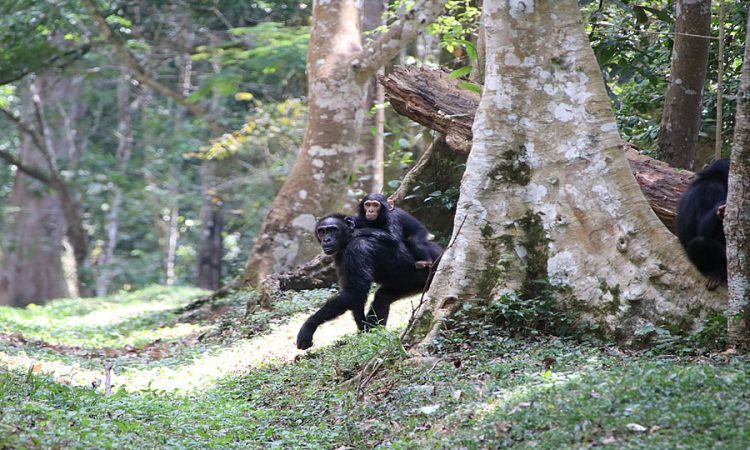
This guide is the family planning reference for chimpanzee trekking with kids in Uganda. It covers the age rule briefly, how the split-day model works in practice, what younger children can do while the adults trek, which lodges suit families, and how to structure a family trip that includes the chimp trekking experience without leaving anyone out. It is a companion to our guide on the chimpanzee trekking age limit, which covers the rule itself in detail. Permit categories and rates sit on the gorilla permits Uganda page, and the wider primate picture is on the primate tracking experiences page. The regulatory framework is published by the Uganda Wildlife Authority.
Chimpanzee trekking with kids — key facts
- Minimum age for chimp trekking: 15 years — enforced at booking and the trailhead
- Golden monkey trek minimum age: 12 years — the only primate trek available to younger teenagers
- Ngamba Island minimum age: None — sanctuary visit, not a trek
- Bigodi Wetland walk minimum age: None
- Kibale night walk minimum age: None — children 8+ usually comfortable
- Game drives and boat safaris: No minimum age
- Best family model: Split day — one parent treks, one parent stays with younger children
- Best family lodges: Lodges with family rooms and child-friendly meals
What is the age rule for chimpanzee trekking with kids?
The age rule for chimpanzee trekking with kids is straightforward: every trekker must be 15 years or older on the trekking day. The rule is set by UWA, applies at every chimpanzee trekking site in Uganda, and is enforced at the point of booking — the trekker’s date of birth is recorded with their passport details — and again at the trailhead briefing on the morning of the trek.
Three things about the rule that matter for family planning:
- It applies to the trekking day, not the booking day. A child who turns 15 between the date of booking and the date of the trek is eligible, provided the passport shows they are 15 on the trekking day. Families whose eldest child is close to 15 should check the exact date before assuming.
- There are no exceptions. The rule does not flex for a 14-year-old who is tall, mature, or an experienced hiker. Operators cannot arrange a workaround, and rangers will refuse an under-15 trekker at the trailhead if there is any doubt.
- The rule is the same at every chimp site. Kibale, Budongo, Kyambura and Kalinzu all apply the 15-year minimum. Shifting to a different site does not change anything.
What matters most for family planning is not the rule itself — it is what families do about it. The good news is that Uganda has an excellent set of alternatives that younger children can do, and a well-planned split day often gives younger children a better experience than the trek itself would have done. Our guide on the chimpanzee trekking age limit covers the enforcement and the reasoning in detail.
Afraeka tip: If your family has a child who will turn 15 in the months before the trip, plan the whole itinerary around that date. A family of four whose eldest turns 15 in August can do the chimp trek together in September; the same family cannot do it in July. The date is the anchor, and it is worth checking it before booking anything else.
How does a split family day work?
The split family day is the standard solution for chimpanzee trekking with kids when not everyone is 15 or older. The principle is simple: the family does not trek together, but the family does not split for the whole day either. One parent treks with the eligible children, and the other parent stays at the lodge or on a nearby activity with the younger children. Everyone reunites in the afternoon.
How a split day typically runs
- Early morning — the trekkers leave. The parent and older children heading for the chimp trek leave the lodge before dawn with a packed breakfast. The parent staying behind is not woken.
- Mid-morning — the family left behind starts their day. The parent and younger children have a relaxed breakfast, then start a family-friendly activity — the Bigodi Wetland Sanctuary walk, a crater lakes drive, a forest birding walk, or a lodge-based activity.
- Late morning — the trekkers return. The chimp trek finishes by midday, and the trekkers are usually back at the lodge by 12:30pm to 1:30pm.
- Afternoon — everyone together. Lunch at the lodge, then a joint afternoon activity — a crater lakes drive, a lodge pool, or simply downtime. The whole family is together for the rest of the day.
The split day is far better than it sounds. The parent staying behind gets a genuinely relaxed morning with the younger children rather than a rushed version of the trek. The younger children get a family-friendly activity that suits their pace. The trekkers get the full chimp trekking experience without the pressure of a child who cannot keep up. And everyone reunites for lunch and the rest of the day.
Three practical points about the split day. First, choose the activities in advance. The parent staying behind should know what they are doing the evening before, not on the morning of the trek. Second, book the same lodge for everyone — the family group should stay together even if the morning is split. Third, plan a joint afternoon activity for everyone. That is what makes the split day feel like one family day rather than two separate experiences.
What can younger children do during the chimp trek?
Younger children have several strong options while the adults and older teenagers are on the chimp trek. The best choices are activities with no minimum age, gentle terrain, and enough variety to keep younger travellers engaged for a full morning.
| Activity | Where | Age suitability |
|---|---|---|
| Bigodi Wetland Sanctuary walk | Near Kibale | Any age; boardwalk trail; birds and monkeys |
| Crater lakes drive | Near Fort Portal / Kibale | Any age; vehicle-based with short stops |
| Tea plantation tour | Near Fort Portal | Any age; short walks, guided |
| Lodge-based activities | Kibale lodges | Any age; depends on the lodge |
| Kibale night forest walk | Kibale | 8+ usually comfortable |
| Ngamba Island sanctuary visit | Entebbe (if based there) | Any age; boat trip and viewing |
| Game drives | Queen Elizabeth (if extending) | Any age; vehicle-based |
Activities vary by location and by what the lodge offers. Confirm availability when booking.
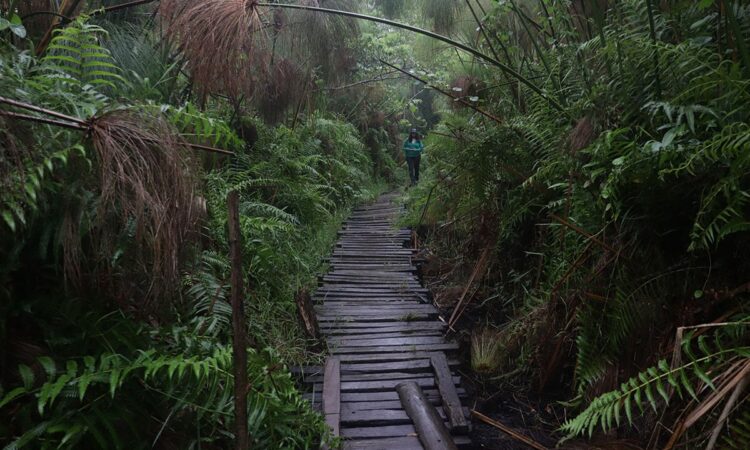
Two of these options stand out for families. The Bigodi Wetland Sanctuary walk is one of the best family activities in western Uganda — the boardwalk trail is easy, the guides are excellent with children, and the birds and monkeys are visible at close range throughout the walk. It is genuinely engaging for younger travellers, and it pairs naturally with a chimp trek on the same day or the day after.
The crater lakes drive is the other strong option. The drive around the ring road near Fort Portal takes in several scenic lakes, with short stops for photography and short walks. It is vehicle-based, which means younger children can rest between stops. For families based at a lodge in the Kibale area, it fills a morning comfortably. Our guide on the Bigodi Wetland Sanctuary walk covers the trail in detail, and the Kibale night forest walk covers the evening activity for children 8 and over.
What is the minimum age for other primate treks?
Uganda’s primate treks have different minimum ages, and knowing them helps families plan which treks their younger children can actually do. The chimp and gorilla treks are both 15, but golden monkey trekking has a minimum age of 12, and the sanctuary and community-walk experiences have no minimum age at all.
| Experience | Minimum age | Notes |
|---|---|---|
| Chimpanzee trekking | 15 | Same at every chimp site |
| Gorilla trekking | 15 | Same at Bwindi and Mgahinga |
| Golden monkey trekking | 12 | Mgahinga only; the lowest age for a proper primate trek |
| Ngamba Island sanctuary visit | None | Family-friendly; boat trip and viewing from platforms |
| Bigodi Wetland Sanctuary walk | None | Community-run; not a trek |
| Kibale night forest walk | None | Family-friendly; children 8+ usually comfortable |
Golden monkey trekking is the only proper primate trek available to children aged 12 to 14 in Uganda.
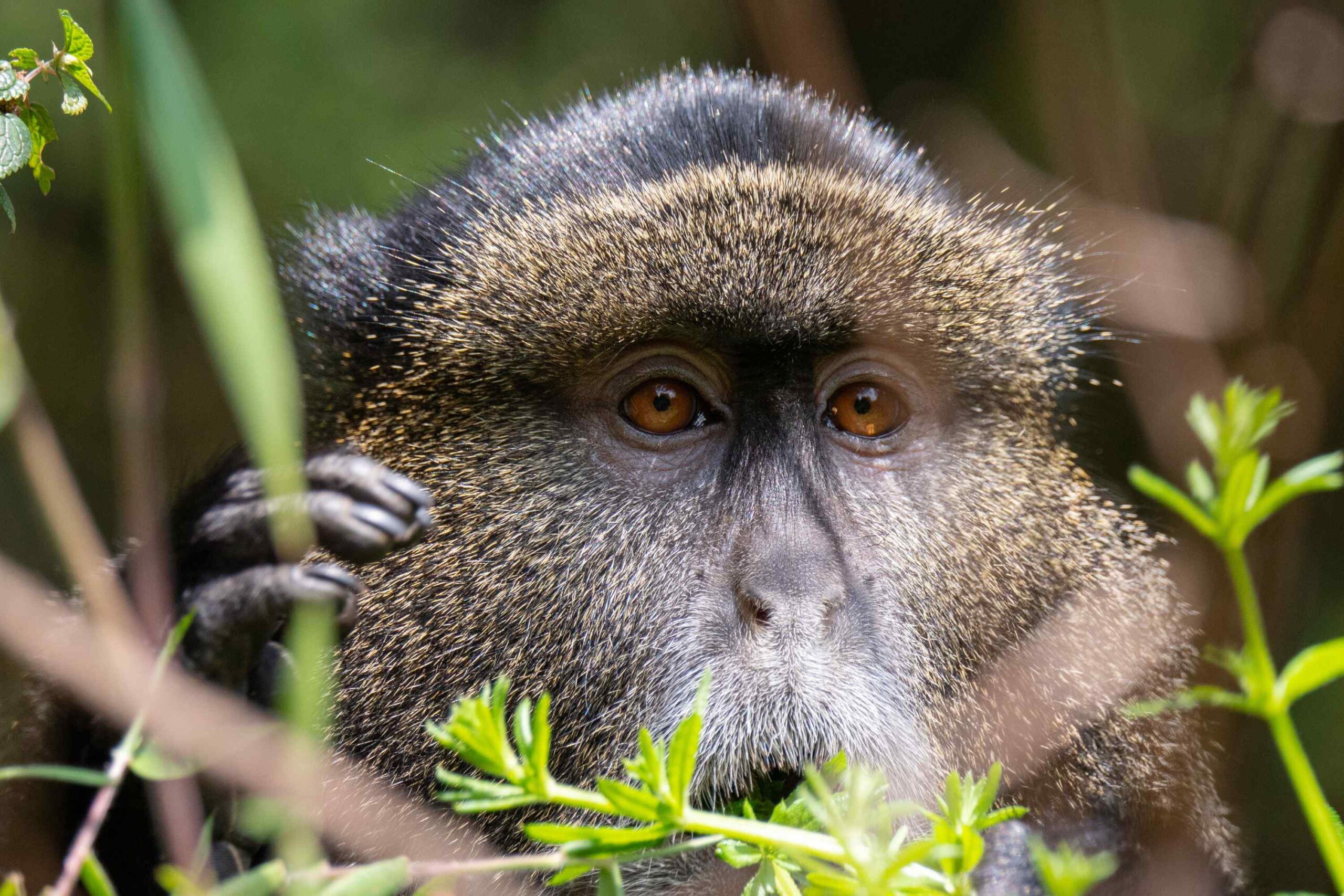
The most useful option for families with a 12- to 14-year-old is golden monkey trekking at Mgahinga. Because the minimum age is 12, the family can trek together — including the teenager who cannot do chimps or gorillas. The trek itself is short, gentle, and full of monkeys at close range, and it delivers a genuinely proper primate trekking experience. Our guide on golden monkey trekking at Mgahinga covers the trek in detail, and the companion guide on golden monkey permit booking covers the logistics.
What should families look for in a lodge?
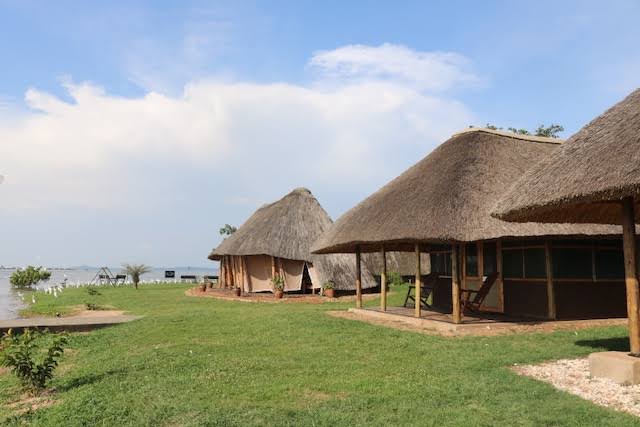
The lodge choice matters more for a family trip than for a solo one. Families staying at a lodge with family rooms, child-friendly meals, and flexible activity arrangements have a much easier trip than families who book a lodge designed primarily for couples or small groups.
Family-friendly lodge features to look for
- Family rooms or interconnected rooms — a single room for four is rarely comfortable
- Flexible meal times — younger children often eat earlier than adults
- Child-friendly meals on the menu or available on request
- Space for children to run around safely within the lodge grounds
- A pool, garden, or common area for downtime
- Staff who are used to families and can organise split-day logistics
- Proximity to family-friendly activities (Bigodi, crater lakes, forest walks)
- Willingness to arrange a packed breakfast for early-departing trekkers
Two practical points on lodge choice. First, book a lodge near the chimp trekking trailhead if you are doing the split day — proximity means the trekkers return quickly and the family is reunited sooner. Second, ask the lodge in advance whether they can arrange family activities for the day of the trek. Most Kibale lodges can, and they usually have a good relationship with the local guides who run the Bigodi walk and the crater lakes drive. Our guide on the Kibale Forest day trip from Fort Portal covers the lodge and activity options around the park.
How do you structure a family trip around the chimp trek?
Chimpanzee trekking with kids works best when the trek is one part of a wider family trip rather than the single focus. A family itinerary of five to seven days gives enough time for the trek, the family-friendly activities, and the slower pacing that children need.
A typical family itinerary with the chimp trek
- Day 1 — Arrival and settle. Arrive in Uganda, overnight in Entebbe. Low-key day for jet-lagged children.
- Day 2 — Entebbe to Kibale. Long drive (5–6 hours), broken with a stop. Arrive at the Kibale lodge by evening.
- Day 3 — Chimp trekking day (split). One parent and older children do the chimp trek. The other parent and younger children do the Bigodi Wetland Sanctuary walk or a crater lakes drive. Everyone reunites for lunch.
- Day 4 — Family activity day. Crater lakes drive, tea plantation tour, or a second Bigodi walk if everyone enjoyed it.
- Day 5 — Kibale to Queen Elizabeth. Drive to Queen Elizabeth (3 hours). Afternoon arrival and evening at the lodge.
- Day 6 — Family game viewing day. Morning game drive in the Kasenyi plains. Afternoon Kazinga Channel boat safari. No age restrictions on either.
- Day 7 — Return to Entebbe. Long drive back, or a shorter leg to a nearby stop. Buffer night in Entebbe before the flight.
Two structural notes on the family itinerary. First, the trekking day is on day 3, not day 1. Jet-lagged children and a pre-dawn trekking start do not mix. Second, the family has several days that are entirely shared — the game viewing days at Queen Elizabeth, the crater lakes day near Fort Portal, and the transfers. The chimp trek is the one day that splits, and everything else is together.
Families who want to extend the trip can add golden monkey trekking at Mgahinga if their children are 12 or older, or a Ngamba Island sanctuary visit at the Entebbe end. The Ngamba Island day trip has no minimum age and is a strong final-day activity for families with younger children. The wider family options across Uganda are mapped on the Uganda destinations page.
When is the best time for a family chimp trek?
The best time for chimpanzee trekking with kids is the drier months — December to February and June to September. The trails are firmer, the roads are more predictable, and the morning treks are less muddy. This matters more for families than for solo travellers, because children are less tolerant of wet, muddy conditions and the day can go sideways quickly if everyone is cold and soaked.
Three practical points on timing:
- Dry season is easier with children. Firmer trails, drier mornings, and less gear to manage. The whole family has a better day.
- School holidays coincide with peak season. June to September and December to February overlap with northern hemisphere school holidays, which is when most families travel. Book permits and lodges as early as possible for those windows.
- Low season is quieter. April, May and November are less crowded and often cheaper. If your family can travel outside school holidays, the low season offers the same wildlife with fewer crowds — but expect muddier trails and slower days.
The wider family travel options across Uganda and the season-by-season picture sit with the Uganda Tourism Board. Families planning a chimp trek should also check the permit availability windows — the chimp permits at Kibale fill up months ahead for peak-season dates, and the split-day logistics only work if the permits are secured first.
Common mistakes with chimpanzee trekking and kids
Most of what goes wrong with chimpanzee trekking with kids comes down to a small set of avoidable mistakes, and all of them can be prevented with one careful planning conversation.
- Assuming a workaround for the age rule. The 15-year minimum is enforced at booking and at the trailhead. No amount of pre-trip correspondence changes it. Plan around the rule, do not try to argue past it.
- Booking the same activities for the whole family on the trekking day. The split-day model works because the two halves of the family do different things. Booking everyone into the same activity on the same day defeats the purpose.
- Not planning the split in advance. Decide what the family left behind is doing the evening before the trek, not on the morning. The parent staying behind should not be improvising.
- Forgetting to reunite. The split day works when everyone is back together by lunch. Plan a joint afternoon activity so the day feels whole.
- Booking a lodge with no family rooms. Families of four or more need proper family accommodation. A single double room with extra beds is rarely comfortable, especially for more than a night or two.
- Booking long drives on consecutive days. Families with younger children need slower pacing. Break long drives with stops and build in recovery days.
- Skipping the golden monkey option. If your children are 12 to 14, golden monkey trekking at Mgahinga is the only proper primate trek they can do. It is worth adding to a family itinerary.
- Underestimating jet lag. Do not schedule the chimp trek on the family’s first full day in Uganda. Arrival day, one buffer day, then the trek.
Can one permit cover two people?
No. One permit covers one person for one trek, and this applies to chimpanzee trekking with kids the same as to any other Uganda primate experience. A family of four doing the chimp trek needs four permits, but only if all four are 15 or older. If one child is under 15, the family needs three permits and one child does a non-trek activity instead. Current permit categories and rates sit on the gorilla permits Uganda page.
Because the age rule limits who can trek, the permit count for a family trip depends on the ages in the family. Two parents and two teenagers 15+ = four chimp permits and four gorilla permits if the family continues to Bwindi. Two parents, one 15-year-old and one 12-year-old = three chimp permits (and one golden monkey permit for the 12-year-old if the family extends to Mgahinga). Two parents and two children under 12 = two permits, with both children doing non-trek activities.
Once the permits are confirmed, the specific community you follow is allocated on the morning of the trek. You will know your site in advance because it is on the permit; you will learn your community at the briefing alongside everyone else. The one-hour viewing window, seven-metre distance rule, no-flash rule and health exclusion apply to every trekker regardless of who is in the group. The regulatory framework is set by the Uganda Wildlife Authority.
Afraeka field note: A family of five once contacted us with three children aged 17, 14 and 9. The 17-year-old could trek, the 14-year-old could not (chimp minimum 15), and the 9-year-old could not. Their original plan had been for the whole family to trek together — which, on discovering the rule, turned into a completely different itinerary. We restructured it: the parents and the 17-year-old trekked chimps on the Wednesday morning, while the 14- and 9-year-olds did the Bigodi Wetland Sanctuary walk with a guide and their grandmother. In the afternoon, the whole family did the crater lakes drive together. The parents’ comment afterwards was that the split day had been the best-planned day of the trip — the younger children had seen red colobus monkeys, mangabeys and a dozen bird species at close range on Bigodi, which the 17-year-old had not seen on the trek. That is the honest pattern with families and the chimp age rule. The rule is fixed, and the split day is not a compromise — when it is planned well, it often gives everyone a better day than a shared trek would have.
A question that comes up regularly on TripAdvisor’s Uganda forum and on r/Uganda is some version of: “Can I do chimpanzee trekking with a 12-year-old?” The honest answer is no — the minimum age is 15 and it is enforced. But the honest follow-up is that this does not have to ruin the trip. Families with younger children can still have a strong Uganda primate experience by combining the split-day chimp trek for the adults and older children with a family-friendly alternative for the younger ones. Golden monkey trekking at Mgahinga is available to children 12 and over, and the Bigodi walk, the Kibale night walk and the Ngamba Island sanctuary have no minimum age at all.
Frequently asked questions
What is the minimum age for chimpanzee trekking with kids?
15 years, set by UWA and enforced at booking and the trailhead briefing. The rule applies at every chimp trekking site in Uganda. Children under 15 cannot trek, and there are no exceptions. Families with younger children plan a split day instead.
Can a family with a child under 15 still do a chimp trek?
Yes, but only the trekkers who are 15 or older. The family plans a split day: one parent and older children do the chimp trek, while the other parent and younger children do a family-friendly activity. Everyone reunites for lunch and the rest of the day.
What can younger children do while the adults trek?
Several options: the Bigodi Wetland Sanctuary walk (no minimum age), a crater lakes drive, a tea plantation tour, a forest birding walk, lodge-based activities, or a Kibale night forest walk if they are 8 or older. These are booked in advance and run by local guides or the lodge.
Is there a lower age limit for other primate treks?
Yes. Golden monkey trekking at Mgahinga has a minimum age of 12, which is lower than the chimp and gorilla minimum of 15. It is the only proper primate trek available to children aged 12 to 14 in Uganda. Ngamba Island sanctuary and the Bigodi walk have no minimum age.
How does a split day work in practice?
The trekkers leave the lodge before dawn. The parent staying behind starts the day later with a relaxed breakfast, then a family-friendly activity. The trekkers return by midday, and everyone reunites for lunch. The afternoon is shared.
Should we book a lodge with family rooms?
Yes — this matters more for a family trip than a solo one. Look for family rooms or interconnected rooms, child-friendly meals, flexible meal times, space for children to run around, and staff used to families. Proximity to the chimp trekking trailhead is also useful for a split day.
What is the best time for a family chimp trek?
The drier months of December to February and June to September. Trails are firmer, roads are more predictable, and children are less likely to be cold and wet. Peak-season dates overlap with northern hemisphere school holidays, so book early.
Can we bring a child under 12 to Mgahinga for golden monkeys?
No — the golden monkey trek minimum age is 12. Children under 12 cannot trek golden monkeys. However, Mgahinga has other family-friendly options, including the Batwa cultural experience and shorter forest walks that have no minimum age.
Do I need a separate permit for each family member?
Yes. One permit covers one person for one trek. A family of four needs four permits if all four are 15 or older. If one child is under 15, the family needs three permits and the younger child does a non-trek activity instead.
Planning a family trip with a chimp trek?
Send us your dates and the date of birth for every child in the party, and we will tell you straight away who can trek and who cannot. If younger children are travelling, we will build a split-day itinerary that gives the trekkers their chimp day and the younger children a family experience that suits them. No price figures until we know your route, because the permits are only one line of the total.
About the author: Victoria Kayaga is a Ugandan-born safari expert and founder of Afraeka Adventures, with 15+ years in East African tourism. Based in Kampala, she has planned primate-focused itineraries for families across Kibale, Bwindi, Mgahinga and the wider western circuit for years, and she advises parents on structuring a family trip around the primate age rules. More about Victoria.
Keep planning