Facts About Uganda: Uganda is a country most travellers think they already know something about — gorillas, the source of the Nile, the equator — and then discover that half of what makes it interesting was never in the guidebook. It is one of the few places on earth where glaciers sit on the equator, where a bird large enough to look prehistoric stalks the swamps, and where the national football team shares its name with a bird on the flag.
This post collects the facts worth knowing before you go — the geography that explains why the country looks the way it does, the wildlife that makes it unusual, and the cultural details that make a trip feel like somewhere rather than anywhere. It ends with the handful of facts that actually change how you plan a trip, and it separates the two deliberately: some of this is interesting, some of it will affect your booking.
Geography: A Small Country With an Unfair Amount in It
Uganda is landlocked — and yet it has the source of the Nile. The Nile, one of the world’s longest rivers, begins its journey at Jinja where it leaves Lake Victoria. The spot is marked and accessible, and it is one of the few places you can stand at the start of something that ends 6,000 kilometres away in the Mediterranean.
The equator runs through the country. Uganda sits directly on the equator, and there is a monument at Kayabwe on the Kampala–Masaka road marking the crossing. It is a genuinely popular stop, partly because the water-draining demonstration performed there — the claim that water swirls in different directions on each side — is a piece of theatre rather than physics. Worth knowing before you are impressed by it. The underlying fact — that you are standing on the equator — is real.
There are glaciers on the equator. The Rwenzori Mountains, on the border with DR Congo, hold permanent glaciers and snow at high altitude. This is genuinely rare: very few places on earth combine equatorial latitude with glaciation. The range’s highest peak, Margherita, sits at over 5,000 metres and is often listed as Africa’s third highest, after Kilimanjaro and Mount Kenya.
Lake Victoria is Africa’s largest lake by area and the second largest freshwater lake in the world by area. Uganda shares it with Kenya and Tanzania, and a substantial part of the country’s south is lake, islands and shoreline.
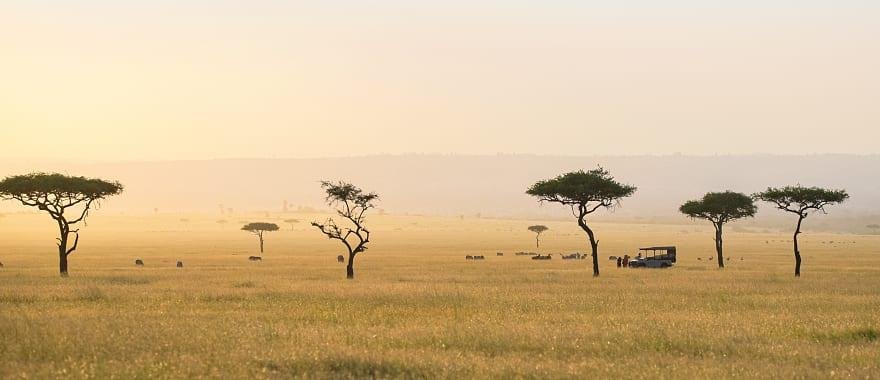
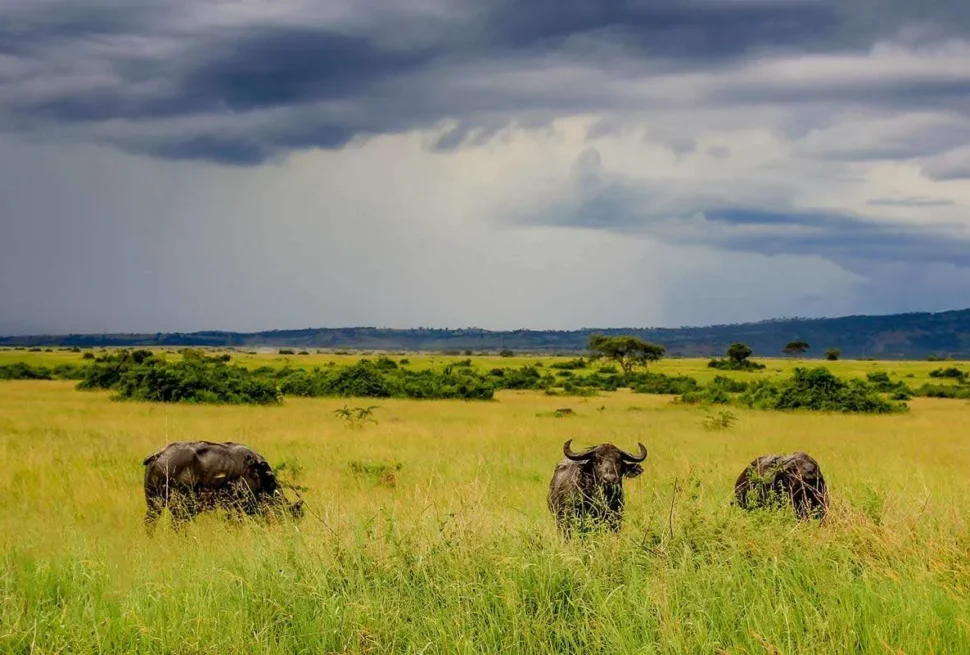
There are ten national parks. For a country roughly the size of the United Kingdom, that is a remarkable spread — and they are genuinely different from each other: savannah in the north, forest in the south-west, mountains in the west, wetland and lake in the centre. The Uganda safari packages page shows how these combine into itineraries.
Wildlife: The Numbers That Stand Out
Uganda has one of the highest concentrations of primates in Africa. Kibale Forest alone has recorded thirteen primate species, which is why it is often called the country’s primate capital. Chimpanzees, red colobus, black-and-white colobus, L’Hoest’s monkeys, red-tailed monkeys, mangabeys and baboons all share the forest. The Kibale chimpanzee trekking guide covers how to see them.
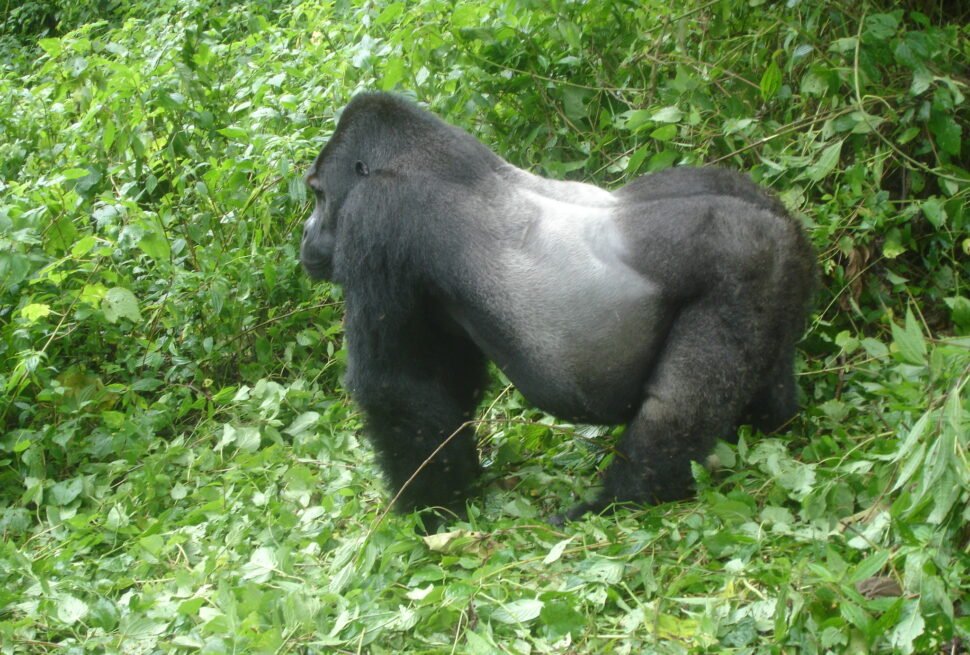
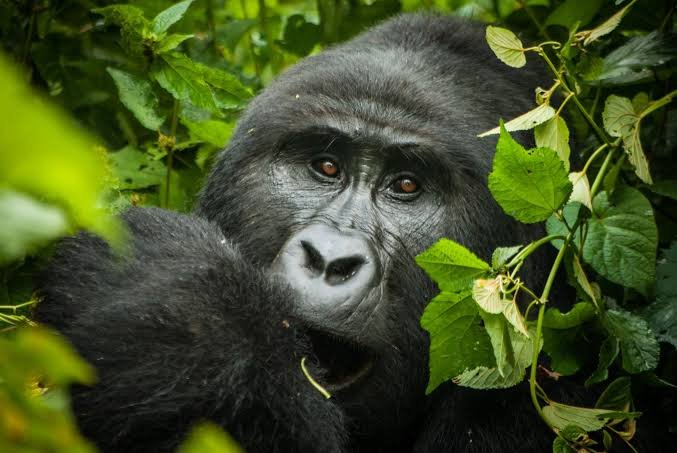
Mountain gorillas live here — and nowhere else except two other countries. Mountain gorillas exist only in Uganda, Rwanda and DR Congo. The global population is approximately 1,000 individuals, which is the number that explains every rule around trekking: the eight-visitor cap per family, the one-hour limit, the minimum age of 15. Uganda’s gorillas are in Bwindi Impenetrable National Park and Mgahinga Gorilla National Park, both in the far south-west. They are not in any other Ugandan park, and they are not in Kenya or Tanzania at all.
Over 1,000 bird species have been recorded. Uganda’s bird list runs to more than 1,000 species, which is extraordinary for a country this size. The reason is habitat diversity: Albertine Rift forest, papyrus swamp, savannah, wetland and Afro-alpine zones all sit within a few hundred kilometres of each other.
The shoebill is real, and it is as strange as it looks. The shoebill — a large, grey, clattering bird with a bill shaped like a wooden clog — is one of the most sought-after species in African birding. Uganda is one of the better places to look for it, with Mabamba Swamp near Entebbe among the most accessible sites. Sightings are never guaranteed anywhere, but the habitat is right.
Uganda is where robusta coffee comes from. The species that produces most of the world’s coffee — Coffea canephora, or robusta — is native to the forests of Uganda. It is a genuine claim rather than a tourism board line, and it explains why coffee is a serious part of the country’s agriculture rather than a novelty.
Culture: Details Worth Knowing
Uganda has over 50 ethnic groups and a corresponding spread of languages. English and Swahili are the official languages, and Luganda is widely spoken in the central region, but the country’s linguistic variety is considerable. Travellers will hear several languages in a single day in Kampala.
The population is one of the youngest in the world. Uganda’s median age sits in the teens, which shapes everything from music to the labour market. It is a noticeable difference from most visitor countries, and it comes up in conversation more than most guidebooks suggest.
The national flag carries a crested crane. The grey crowned crane is the national bird, and the football team — the Uganda Cranes — takes its name from it. Uganda is co-hosting AFCON 2027, which is a significant moment for a country where football is followed seriously.
A “Rolex” in Uganda is not a watch. It is a street food: a chapati rolled around an omelette with onions, cabbage and tomato. It is cheap, ubiquitous, and eaten at any hour. Ask for one and you will be handed breakfast, not jewellery.
Matoke is the staple. Steamed cooking banana, usually served with groundnut sauce and meat or beans. It appears on nearly every menu in the country and is worth trying properly rather than avoiding in favour of international dishes.
Boda bodas are how cities move. Motorbike taxis are everywhere, cheap and fast. They are also the thing every visitor is warned about. Whether to use them is a personal judgement; what matters is knowing they exist and that they shape how Kampala and other towns function.
Winston Churchill called Uganda “the Pearl of Africa.” The phrase is on every tourism brochure in the country and it is genuinely his, from his 1908 account of travelling through the region. It has been used ever since, and while it is now a marketing line, the landscape it described has not changed as much as you might expect.
The Facts That Actually Change Your Trip Planning
This is where the interesting becomes useful. A handful of facts are not trivia — they determine what you can book, who can go, and what it costs.
| Fact | Detail | Why it matters |
|---|---|---|
| Gorilla permit price | From $800 per person; from $600 in April, May and November | The largest fixed cost on most Uganda trips, and the low-season discount is real |
| Gorilla habituation experience | From $1,500 — four hours with a semi-habituated family, Rushaga sector only | The same price as Rwanda’s standard one-hour trek, for four hours |
| Minimum age for gorilla trekking | 15 years | Non-negotiable and a condition of the permit — it decides family itineraries |
| Maximum visitors per gorilla family | 8 people | Why permits sell out and why you book months ahead |
| Time with the gorillas | 1 hour standard; 4 hours on the habituation experience | Sets expectations for the day itself |
| Uganda e-visa | $50, applied at visas.immigration.go.ug | Required before travel — verify current requirements, rules change |
| East African Tourist Visa | $100, 90 days, multi-entry, Uganda + Kenya + Rwanda | Not always cheaper than separate visas — it does not cover Tanzania |
Two of those deserve expanding, because they are the ones travellers most often get wrong.
Uganda’s low-season gorilla permit is the only genuine seasonal discount in the region. April, May and November bring the permit down to $600. Rwanda’s permit is $1,500 all year with no discount, so a traveller weighing the two countries should note that the gap widens considerably in those months. The trade-off is wetter conditions and muddier trails.
The East African Tourist Visa is not automatically the better buy. At $100 it costs more than Uganda’s $50 e-visa plus Kenya’s eTA from $30. It earns its place when you add Rwanda, need multi-entry, or cross borders more than once — and it does not cover Tanzania. The Uganda visa requirements guide works through the arithmetic.
One correction worth stating because it circulates widely: the Uganda–Russia visa waiver announced in October 2026 covers diplomatic and service passports only. It does not apply to ordinary tourist passports and has not yet entered into force.
Things That Surprise First-Time Visitors
The roads take longer than the map suggests. Uganda’s distances look manageable on paper and feel considerably longer in practice. A route that appears straightforward on a map may involve substantial driving on roads that are not what you are used to. Build slack into any itinerary rather than planning to the kilometre.
The country is greener and higher than expected. Much of Uganda sits at altitude, and Kampala and the south-west in particular are not the hot, flat landscape some visitors picture. Evenings can be cool. Packing for a hot country and arriving to chilly mornings is a common mistake.
Wildlife is not evenly distributed. Gorillas are in the far south-west, chimpanzees in Kibale and a few other forests, the best savannah in the north and west. There is no single park that offers everything, which is why Uganda itineraries involve more movement than Kenyan or Tanzanian ones.
The food is better than its reputation. Ugandan cooking is built around beans, plantain, cassava, maize and grilled meats, and it is worth eating properly rather than defaulting to hotel menus. The Rolex alone justifies a street-food morning.
Frequently Asked Questions
What is Uganda most famous for?
Mountain gorillas, the source of the Nile at Jinja, and its primate and bird diversity. It is also known as the “Pearl of Africa,” a phrase coined by Winston Churchill.
How many national parks does Uganda have?
Ten, ranging from savannah in the north to forest, mountain and wetland. They are spread across the country rather than clustered, which affects itinerary planning.
Do you need a visa to visit Uganda?
Most visitors need one. Uganda’s e-visa costs $50 and is applied for at visas.immigration.go.ug. Verify current requirements before travel — rules change, and the Uganda–Russia waiver announced in October 2026 does not apply to ordinary tourist passports.
Can you see gorillas anywhere in Uganda?
Only in Bwindi Impenetrable National Park and Mgahinga Gorilla National Park, both in the far south-west. Mountain gorillas exist in Uganda, Rwanda and DR Congo only — there is no gorilla trekking in Kenya or Tanzania.
What language is spoken in Uganda?
English and Swahili are the official languages. Luganda is widely spoken in the central region, and more than 50 ethnic groups speak their own languages.
What food is Uganda known for?
Matoke (steamed cooking banana), groundnut sauce, grilled meats, and the Rolex — a chapati rolled around an omelette, not a watch. Ugandan robusta coffee is native to the country’s forests.
When is the best time to visit Uganda?
The drier windows, roughly December to February and June to September, give firmer forest trails and easier travel. April, May and November bring Uganda’s reduced $600 gorilla permit but wetter conditions.
Is Uganda safe for travellers?
This is a question for your own government’s travel advisory rather than a safari operator’s blog, and it should be checked close to departure. For trip-specific advice on parks, transfers and itineraries, contact an operator directly.
How to Book
Most of the facts above turn into decisions at the point of booking: which parks to combine, whether to travel in the low season for the reduced permit, and how far ahead to secure a gorilla date. Afraeka Adventures is a licensed Ugandan operator based in Entebbe and Kampala, running gorilla trekking, primate safaris and multi-country itineraries since 2018.
Contact Afraeka Adventures at info@afraekaadventures.com or use the enquiry form on our website with your dates, group size and what you most want to see. Useful starting points:
- Uganda gorilla trekking — the main trekking guide
- Chimpanzee trekking in Kibale Forest — the primate capital
- Uganda safari packages — itineraries across the parks
- Uganda visa requirements — the e-visa and EATV arithmetic
- East Africa multi-country safaris — if you are adding Kenya or Rwanda
- All tour packages
- Enquiry form
For park regulations and current permit information, the Uganda Wildlife Authority publishes official guidance — check before travel, as rules and rates are revised periodically.