Last updated: 26 September 2026. Rates and availability are set by UWA and subject to change — confirm before booking.
Short answer: A 4 day Bwindi gorilla trekking safari by road is the standard road-based gorilla itinerary with one extra day built in. Two days are the long drives from Kampala or Entebbe to Bwindi and back (8–9 hours each way). One day is the gorilla trek. The fourth day is a buffer — a recovery day at the lodge, a second trek on a different sector, or a community walk and waterfall trail. The 4-day format is the road version that gives the trekking day proper breathing room instead of squeezing it between two very long drives, and it is the format most travellers book when they are not flying in.
Most travellers who book a gorilla trekking safari in Uganda face the same structural problem. Bwindi sits in the extreme south-west of the country, and the drive from Kampala or Entebbe is eight to nine hours each way. That means a 3-day road safari is essentially two long driving days wrapped around one trekking day, with no slack for delays and no time to recover from the trek before turning around and driving back. The 4-day format solves this by adding a single extra day — a buffer that can be used for rest, a second activity, or simply a slower pace.
This guide covers what a 4 day Bwindi gorilla trekking safari by road actually involves — the day-by-day route, the drive itself, the buffer day options, the trade-offs against shorter and longer formats, and who the format suits. It is a companion to the shorter road version and to the fly-in option covered elsewhere on this site. Permit categories and current rates sit on the gorilla permits Uganda page, and the wider gorilla context is on the Uganda gorilla trekking hub. The regulatory framework for Uganda’s protected areas is published by the Uganda Wildlife Authority.
4 day Bwindi gorilla safari by road — key facts
- Route length: 4 days total including arrival and departure days
- Driving: roughly 8–9 hours each way from Kampala or Entebbe
- Gorilla trekking day: one full day (usually day 2 or day 3)
- Buffer day: one extra day for rest, a second activity, or a second trek
- Permits required: One gorilla permit per trekker (two if doing a second trek)
- Minimum age: 15 years
- Best season: Dry months (Dec–Feb, June–Sept) for easier trails
- Best for: Travellers who want a proper buffer day without flying
What is a 4 day Bwindi gorilla trekking safari by road?
A 4 day Bwindi gorilla trekking safari by road is a four-day itinerary that reaches Bwindi by driving rather than by flying and uses the extra day over the 3-day version as a buffer. It is the standard road-based format for travellers who want proper pacing rather than a rushed turnaround.
Three things define the format:
- The drives are the same as any road safari. Kampala or Entebbe to Bwindi is 8 to 9 hours each way, roughly 500 kilometres via Mbarara and Kabale. The 4-day format does not change the driving — it changes how the trip is structured around it.
- The buffer day is what the extra day is for. A 3-day road safari has no room for anything except the drives and the trek. The 4-day format inserts one day at Bwindi that can be used however the traveller prefers — rest, a second activity, or a slower return.
- It works with any Bwindi sector. The 4-day format is not sector-specific. Buhoma, Ruhija, Rushaga and Nkuringo all work in this structure, and the sector choice is driven by permit availability and trekking preferences rather than by the format itself.
The practical consequence is that the 4-day format is a pacing solution rather than a different itinerary. What you see — the gorillas, the forest, the lodge — is the same as a 3-day version. What changes is that the trip has enough slack to absorb a late trek, a recovery day, or a community walk without cutting into the return drive. The wider set of gorilla formats sits on the Uganda gorilla trekking hub.
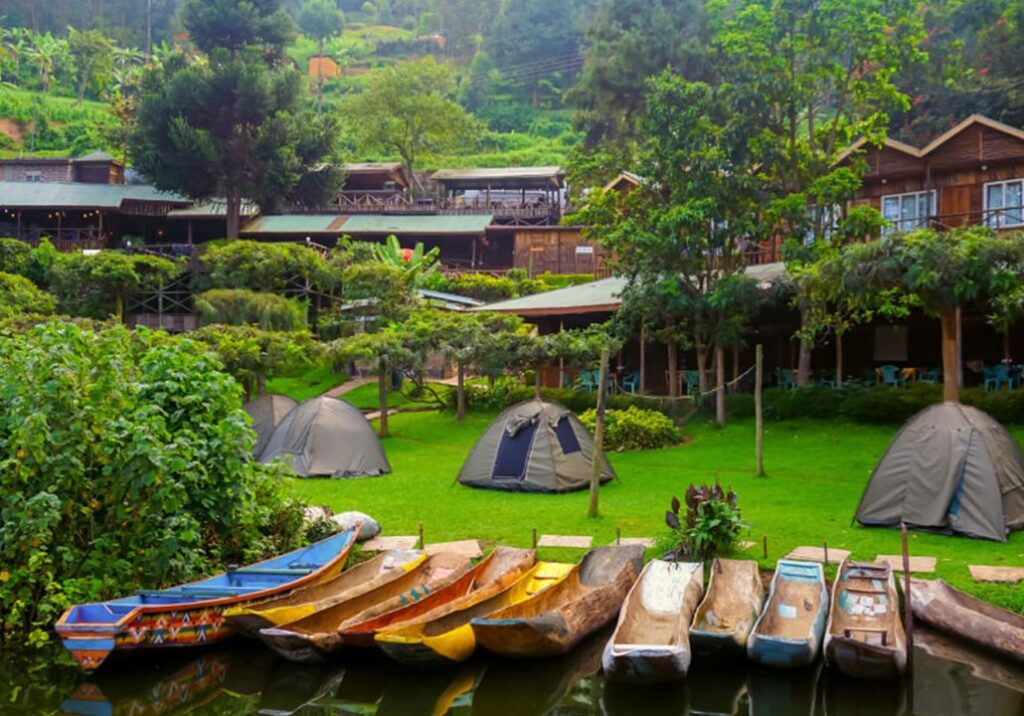
Afraeka tip: If you are booking a 4 day Bwindi gorilla trekking safari by road, book the gorilla permit first and then match the lodge. The permit determines the sector and the date, and the lodge needs to be within a short drive of that sector’s trailhead. Buhoma permits need a Buhoma lodge; Rushaga permits need a Rushaga lodge. This is the same rule as any gorilla trip, but it matters more on the 4-day format because the buffer day is often spent at the lodge — and a lodge that is well placed for the trailhead is a better place to have a rest day.
What does the road journey look like?
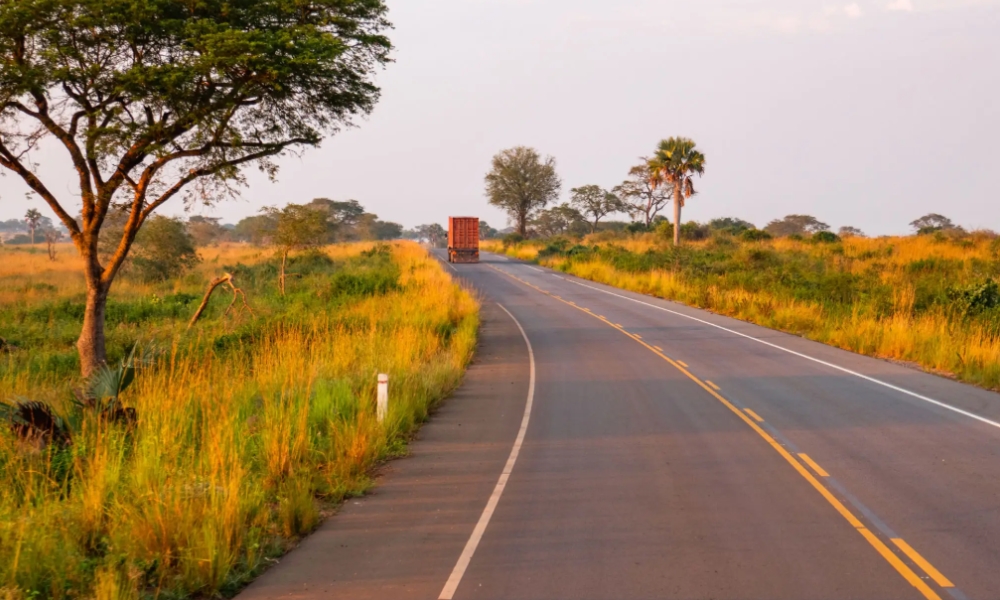
The road journey from Kampala or Entebbe to Bwindi is the single biggest factor in the shape of the 4-day itinerary. It is a genuine long-haul drive — 8 to 9 hours in a vehicle — and the two driving days are the most demanding parts of the trip.
| Segment | Distance | Drive time | Notes |
|---|---|---|---|
| Kampala or Entebbe to Mbarara | ~270 km | 3.5–4 hours | Tarmac; the longest single stretch |
| Mbarara to Kabale | ~140 km | 2–2.5 hours | Tarmac; scenic highland driving |
| Kabale to the Bwindi sector | ~80–130 km | 2–3 hours | Murram sections; slower in the wet season |
| Total | ~500 km | 8–9 hours | Most travellers break it once |
Drive times are approximate. Traffic out of Kampala in the morning can add 30–60 minutes.
Two practical points about the drive. First, most 4-day safari operators break the drive with a lunch stop at Mbarara or a stretch at the equator crossing. The journey itself is part of the trip — the highlands around Kabale are genuinely scenic, and travellers often say the drive down is a highlight in its own right. Second, the drive back is the harder of the two, because it comes after the gorilla trek. A buffer day between the trek and the return makes the drive back much more manageable, which is one of the main reasons the 4-day format exists.
The wider logistics of getting to Bwindi are covered on the Uganda destinations page. Travellers who want to skip the drive entirely should consider the fly-in version — our guide on the 2 day gorilla trekking fly-in safari from Entebbe covers the alternative for travellers on a fixed short schedule.
What does the day-by-day route look like?
The 4-day route has a fixed shape: two driving days at either end and two days at Bwindi, one of which is the trekking day and the other the buffer.
The 4-day route, day by day
- Day 1 — Kampala or Entebbe to Bwindi. Depart at 6:00–7:00am. Drive south-west via Mbarara and Kabale, with a lunch stop and a short equator or photo break. Arrive at your Bwindi lodge in the late afternoon or early evening. Dinner and an early night.
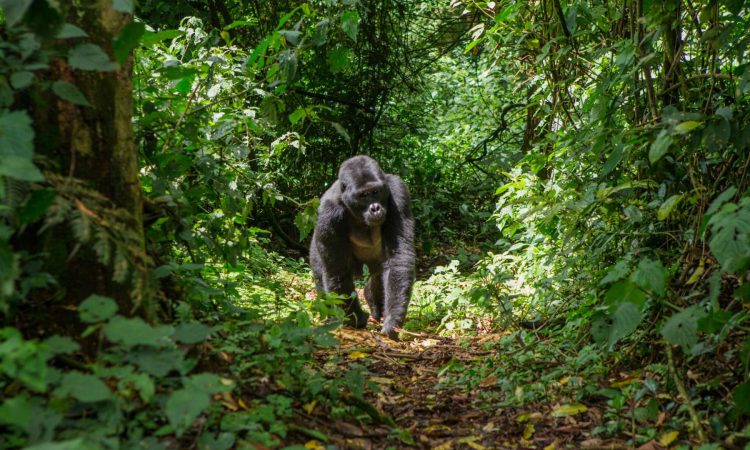
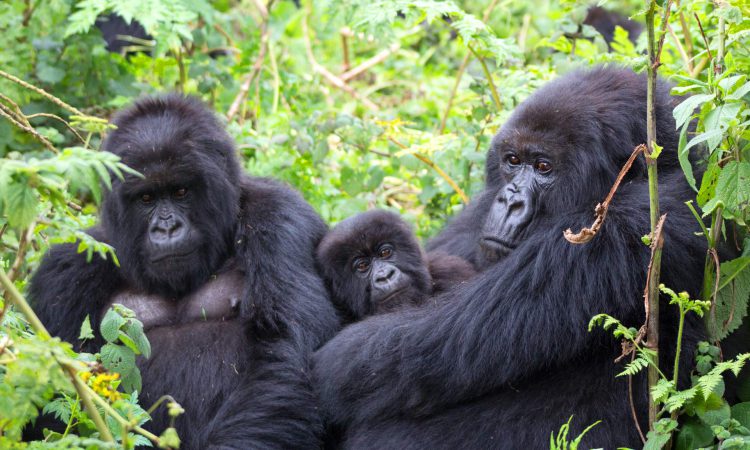
- Day 2 — Gorilla trekking day. Pre-dawn departure for the trailhead. Briefing, forest walk, one hour with the gorilla family, walk back. Return to the lodge by early afternoon. Rest for the remainder of the day.
- Day 3 — Buffer day. Used at the traveller’s discretion. Options include a rest day at the lodge, a community walk through a village at the edge of Bwindi, a guided forest walk to a waterfall trail, or a second gorilla trek on a different sector (which requires a second permit).
- Day 4 — Bwindi to Kampala or Entebbe. Depart after breakfast. Drive north-east via Kabale and Mbarara, with a lunch stop. Arrive back in Kampala or Entebbe by late afternoon or early evening.
Two structural notes on this route. First, the trekking day is almost always day 2, not day 3. Trekking on the first full day at Bwindi makes the buffer day available as a genuine rest day, which is the point of the format. Second, the return drive on day 4 is the longest day of the trip and the most likely to be affected by a late start or a slow murram section. Build in buffer time if you have an onward flight.
The gorilla trekking day itself is the same one-hour experience regardless of the format. Our guide on how long a gorilla trek takes covers the timings in detail, and the sector guides cover the terrain for each of Bwindi’s four trekking areas.
How should you use the extra day?
The extra day in the 4 day Bwindi gorilla trekking safari by road is the format’s main advantage, and how you use it shapes the feel of the trip. There are four common ways to spend the buffer day, and they suit different travellers.
| Option | Who it suits | What it involves |
|---|---|---|
| Rest at the lodge | Everyone, especially older travellers and anyone with fitness concerns | Slow day at the lodge — reading, spa treatments, watching forest wildlife |
| Community walk or Batwa cultural experience | Families, cultural travellers | Guided walk through a village at the park edge; 2–4 hours |
| Bwindi waterfall trail or forest birding | Active travellers, birders | Guided forest walk to the Munyaga waterfall or a morning of forest birding |
| Second gorilla trek on a different sector | Serious gorilla enthusiasts | Requires a second permit; trek on a different sector for a different family |
The buffer day is flexible. Many travellers combine two or three of these across the day.
The most common choice is a rest day at the lodge. The gorilla trek is a full-day physical activity, and the day after the trek is often when the fatigue catches up. A slow day at the lodge — with a late breakfast, a massage, an afternoon nap, and a guided forest walk in the early evening — delivers as much value as any additional activity.
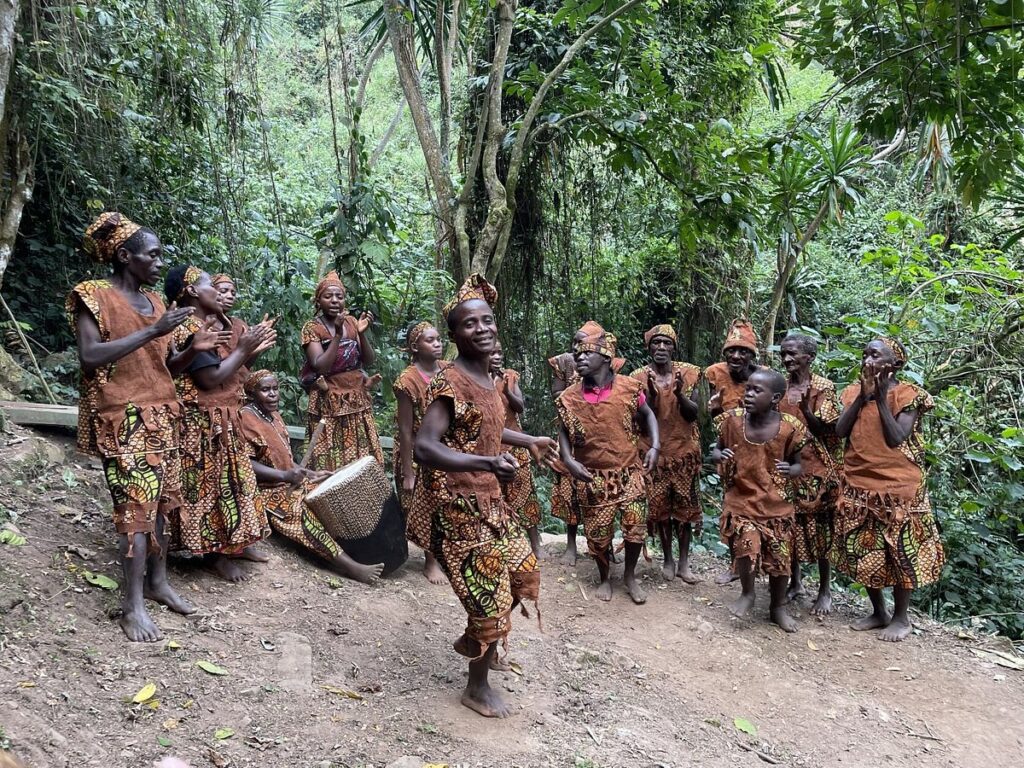
Travellers who want more should consider the community walk. The Buhoma community walk through the village at the park gate, or the Batwa cultural experience, is a two- to four-hour activity that adds depth to the trip and contributes directly to local communities. It sits alongside the gorilla trek as one of the more rewarding experiences on the itinerary. Details sit on the Uganda destinations page.
For travellers whose priority is the gorillas specifically, the buffer day can be used for a second trek on a different sector. This requires a second gorilla permit, and it needs to be booked at the same time as the first permit to guarantee availability. Our guide on gorilla trekking two days in a row covers the two-trek format in detail.
When is the best time for the 4-day road safari?
The best time for a 4 day Bwindi gorilla trekking safari by road is the drier months — December to February and June to September. The trails at Bwindi are firmer, the murram road sections on the drive are more predictable, and the trekking day is more comfortable. The wet months of April, May and November are workable but slower, and the drive can be extended significantly by mud on the murram sections.
Three practical points on timing:
- Dry season is easier on the drive and the trail. The murram sections between Kabale and the Bwindi sectors are firmer and faster. The trekking trails are less slippery, which matters most in the harder sectors — Nkuringo and Ruhija in particular.
- Wet season is more affordable. Permits and lodges are more available and often less expensive in April, May and November. The trade-off is a slower drive and wetter trails.
- Peak-season permits need early booking. Bwindi’s gorilla permit pool is limited to eight trekkers per habituated family per day. Book six to twelve months ahead for the June–September and December–February windows.
The wider country season picture sits with the Uganda Tourism Board. The 4-day format is genuinely year-round, and the trade-offs between seasons are about comfort and cost, not about whether the trip works.
Who is the 4-day format best for?
The 4 day Bwindi gorilla trekking safari by road is the right format for a specific set of travellers. It is not the right choice for everyone — the fly-in version is faster, and the 3-day version is cheaper — but for travellers who want the road experience with proper pacing, the 4-day format is the strongest option.
Book the 4-day format if you are…
- Travelling by road (not flying) and want a proper buffer day at Bwindi
- Wanting to add a community walk or a second activity without losing the trekking day
- Travelling with older relatives or anyone who needs recovery time after the trek
- Considering a second gorilla trek on a different sector
- Wanting the drive itself to be part of the experience rather than a rushed transfer
- On a slightly longer window than a long weekend and can afford one extra day
Consider a shorter or longer format if you are…
- On a fixed short window — the 2-day fly-in format saves the driving days entirely
- Wanting the cheapest road option — the 3-day format cuts the buffer day
- Wanting to combine Bwindi with Kibale, Queen Elizabeth or Lake Mburo — that requires a 7- to 10-day itinerary
- Wanting Mgahinga gorillas or golden monkeys as well — that adds two to three days
The 4-day road format is the sweet spot for road-based gorilla trips. It is long enough to properly recover from the trek and short enough to fit into a standard travel window. For travellers doing a wider Uganda trip, it slots naturally into the middle of a longer itinerary that includes the western parks. Our guide on the 7-day Uganda primate safari shows how Bwindi sits within a longer route.
How do you book a 4-day road safari?
You book a 4 day Bwindi gorilla trekking safari by road by confirming the gorilla permit first, then matching the lodge to the sector, then arranging the vehicle and driver-guide for the full route. The permit is the fixed anchor.
What to arrange before the trip
- Gorilla permit at Bwindi — sector and date, paid in full at booking
- Second permit if you are doing a second trek on the buffer day
- Lodge matched to the permit sector
- Vehicle and driver-guide for the four-day route
- Permit for a buffer-day activity if you want a second trek
- Community walk, waterfall trail or birding arranged through the lodge
- Porter arrangements for the trekking day if you want one
- Any mobility or fitness notes shared with the operator in advance
Two things are worth confirming when you book. First, the sector-lodge match. The Bwindi sectors are hours apart, and a lodge that does not match your permit sector adds unnecessary driving to every day. Second, the permit date determines whether the trekking day falls on day 2 or day 3. If you are booking the buffer day for a specific activity like a second trek, the sequence matters — the second trek should be on a different day to the first. Our guide on gorilla permit availability covers the seasonal patterns for booking the permits.
The full trip options that include Bwindi sit on the trips page linked below, and the wider gorilla planning content is on the Uganda gorilla trekking hub.
Common mistakes with the 4-day road safari
Most of what goes wrong with a 4 day Bwindi gorilla trekking safari by road comes down to a small set of avoidable mistakes, and all of them can be prevented with one careful planning conversation.
- Booking the lodge before the permit. Lodges and permits run on separate systems. Match the lodge to the permit sector, not the other way around.
- Scheduling the return drive on the day after the trek. The buffer day exists for a reason. Driving back to Kampala the morning after the gorilla trek is the most exhausting version of the trip.
- Not building in a buffer at the end. If you have an international flight the same day you return to Entebbe, a delay on the road can affect your check-in. Build in a night.
- Underestimating the drive. Eight to nine hours each way is a genuine long-haul drive. Most travellers break it once, and it is worth planning the lunch stop in advance.
- Booking a second trek without a second permit. A second gorilla trek on a different sector requires its own permit. Booking it at the same time as the first ensures availability.
- Choosing the wrong sector for the format. Nkuringo is the hardest sector in Bwindi. On a 4-day trip with a buffer day the harder sector is more manageable, but travellers with knee or fitness concerns should still consider Buhoma instead.
- Not building the buffer day into the plan. The extra day is the whole point of the 4-day format. Leaving it undecided wastes the advantage.
- Travelling with children under 15. The gorilla trekking minimum age is 15 and it is enforced. Families with younger children need a different itinerary entirely.
Can one permit cover two people?
No. One permit covers one person for one trek, and this applies to the 4 day Bwindi gorilla trekking safari by road the same as to any other gorilla format. A couple doing the trip needs two permits; a family of four needs four. If the buffer day is used for a second trek on a different sector, each traveller needs a second permit as well. Each permit is tied to a named individual, and there is no way to share one or transfer it to another person. Current permit categories and rates sit on the gorilla permits Uganda page.
Because the daily cap applies per habituated gorilla family, the permit count is the constraint that shapes the whole itinerary. A party of six needs six permits on the same date and in the same sector, which is a much tighter booking than a solo traveller’s single permit. For travellers planning the buffer day as a second trek, both permits should be booked at the same time so the two treks can be aligned on consecutive days.
Once the permits are confirmed, the specific gorilla family you visit is allocated on the morning of each trek. You will know your sector in advance because it is on the permit; you will learn your family at the briefing alongside everyone else. The one-hour viewing window, seven-metre distance rule, no-flash rule and health exclusion apply to every trekker. The regulatory framework is set by the Uganda Wildlife Authority, and the wider country map is on the Uganda destinations page.
Afraeka field note: A couple in their sixties once booked a 4 day Bwindi gorilla trekking safari by road after considering the fly-in option and deciding the cost was not worth it for them. They trekked on day 2 in Rushaga, spent day 3 on a slow recovery day at the lodge with a short walk in the afternoon, and drove back on day 4. What they told us afterwards was that the buffer day had turned the trip from an endurance test into an actual holiday. The 3-day version, they said, would have been four long days — arrival, trek, departure — with no space to enjoy any of it. The extra day had cost them one night of accommodation and given them the trip they actually wanted. That is the honest value of the 4-day format. It is not about seeing more. It is about having time to feel the trip rather than just completing it.
A question that comes up regularly on TripAdvisor’s Uganda forum and on r/Uganda is some version of: “Is 4 days enough for gorilla trekking in Bwindi?” The honest answer is yes — 4 days is the format that properly fits the road journey, the trekking day and a buffer day. The 3-day version works but leaves no slack. The 4-day version gives the trip a natural rhythm and makes the return drive much more manageable. Travellers who want to add a second trek, a community walk or simply a slow day at the lodge should book the 4-day format rather than trying to squeeze everything into three days.
Frequently asked questions
Is 4 days enough for gorilla trekking in Bwindi?
Yes — 4 days is the standard road-based format. It covers the two driving days, one full trekking day and one buffer day. The buffer day can be used for rest, a community walk or a second trek on a different sector. Shorter formats (3 days) work but leave no slack; the 4-day format is the format most road-based travellers prefer.
How long is the drive from Kampala to Bwindi?
Eight to nine hours, roughly 500 kilometres via Mbarara and Kabale. Most travellers break the drive with a lunch stop in Mbarara and a short photo stop at the equator. The murram sections between Kabale and the Bwindi sectors can add time in the wet season.
What is the difference between the 3-day and 4-day road safari?
The 4-day format adds a buffer day at Bwindi. The 3-day version has two driving days wrapped around one trekking day with no slack. The 4-day format gives travellers a proper recovery day after the trek, which makes the return drive much more manageable and allows for a community walk or a second activity.
Can I do a second gorilla trek on the buffer day?
Yes, if you book a second gorilla permit. A second trek on a different sector gives a different family and a different forest. The permits should be booked at the same time to guarantee availability and to ensure the two treks fall on consecutive days.
What activities can I do on the buffer day?
Options include a rest day at the lodge, a guided community walk at the edge of the park, a Batwa cultural experience, a waterfall trail walk, a morning of forest birding, or a second gorilla trek. The choice depends on whether you want to rest or to add an activity.
When is the best time for a 4-day road safari?
The drier months of December to February and June to September. Trails are firmer, the murram sections of the drive are more predictable, and the trekking day is more comfortable. The wet months of April, May and November are workable but slower.
How far in advance should I book the permits?
Six to twelve months ahead for peak-season dates (June to September and December to February). The gorilla permit pool is limited to eight trekkers per habituated family per day, and peak-season dates sell out months in advance. Low-season dates can sometimes be booked three to six months ahead.
Is the 4-day format suitable for older travellers?
Yes — in fact the 4-day format is the better choice for older travellers, because the buffer day allows proper recovery after the trek and before the return drive. Choose a gentle sector like Buhoma, book a porter for the trekking day, and use the buffer day for rest.
Can I combine the 4-day safari with other Uganda parks?
Yes, but the 4-day format is designed for Bwindi only. Adding Kibale, Queen Elizabeth, Lake Mburo or Mgahinga requires a longer itinerary — typically seven to ten days — with Bwindi in the middle rather than at the end.
Planning a 4-day road safari to Bwindi?
Send us your dates, your party size and the sector you are considering, and we will check gorilla permit availability, match a lodge to your permit sector, and outline how the four days fit together — including how to use the buffer day. If a shorter format or the fly-in version would suit you better, we will say so. No price figures until we know your route, because the permits are only one line of the total.
Plan your 4-day gorilla safari
About the author: Victoria Kayaga is a Ugandan-born safari expert and founder of Afraeka Adventures, with 15+ years in East African tourism. Based in Kampala, she has planned gorilla trekking itineraries across Bwindi’s four sectors and Mgahinga for years, and she advises travellers on how to fit the gorilla trek into a realistic road-based itinerary. More about Victoria.
Keep planning
- 5-day Bwindi and Lake Mburo safari
- 7-day Uganda and Rwanda primate safari
- 16-day Rwanda and Uganda gorilla trekking and big five safari
- All Afraeka trips