Akagera National Park Wildlife is Rwanda’s savannah park, and it is the reason a Rwanda trip does not have to be a single-morning gorilla visit followed by a flight home. The park holds elephant, buffalo, lion, rhino, giraffe, zebra and a long list of antelope across a mosaic of lakes, papyrus swamp and woodland — wildlife that the gorilla parks, which are high-altitude forest, do not hold at all.
This guide sets out what you can realistically expect to see, which parts of the park hold which species, and where the honest gaps are. It is not a Big Five checklist and it is not a general Rwanda overview; both already exist on this site.
Akagera Is Savannah — and the Gorillas Are Somewhere Else
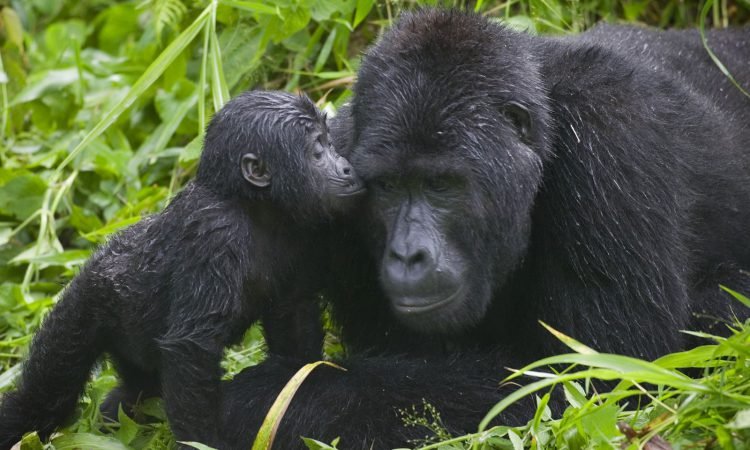
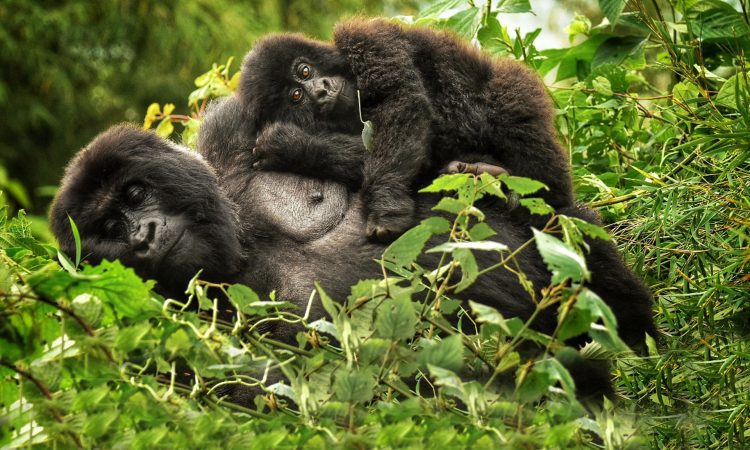
The most useful thing to establish first: Akagera is in eastern Rwanda, on the border with Tanzania, and it is a savannah-and-wetland park. Mountain gorillas are in Volcanoes National Park in the north-west, a completely separate park several hours away, and gorilla trekking is not available in Akagera.
That distinction matters for itinerary planning. A Rwanda trip that includes both is two trips joined together — savannah game viewing in the east and forest trekking in the north-west — and the transfer between them is a real part of the schedule, not a footnote. Travellers who want gorillas specifically should start with the Rwanda gorilla trekking guide; this post is about the wildlife half.
Akagera’s wildlife was heavily depleted during the 1990s, and the park has been rebuilt since through protection, boundary changes and a series of reintroductions. That history explains why the park today feels like a recovering ecosystem rather than a long-established reserve — densities are lower than in parts of East Africa’s older parks, but the park is well managed and the game viewing is genuine.
What Big Game You Can Realistically Expect Akagera National Park Wildlife
Some species are near-certain on a full day of driving; others are a matter of luck and time of year. Setting expectations honestly is more useful than a list.
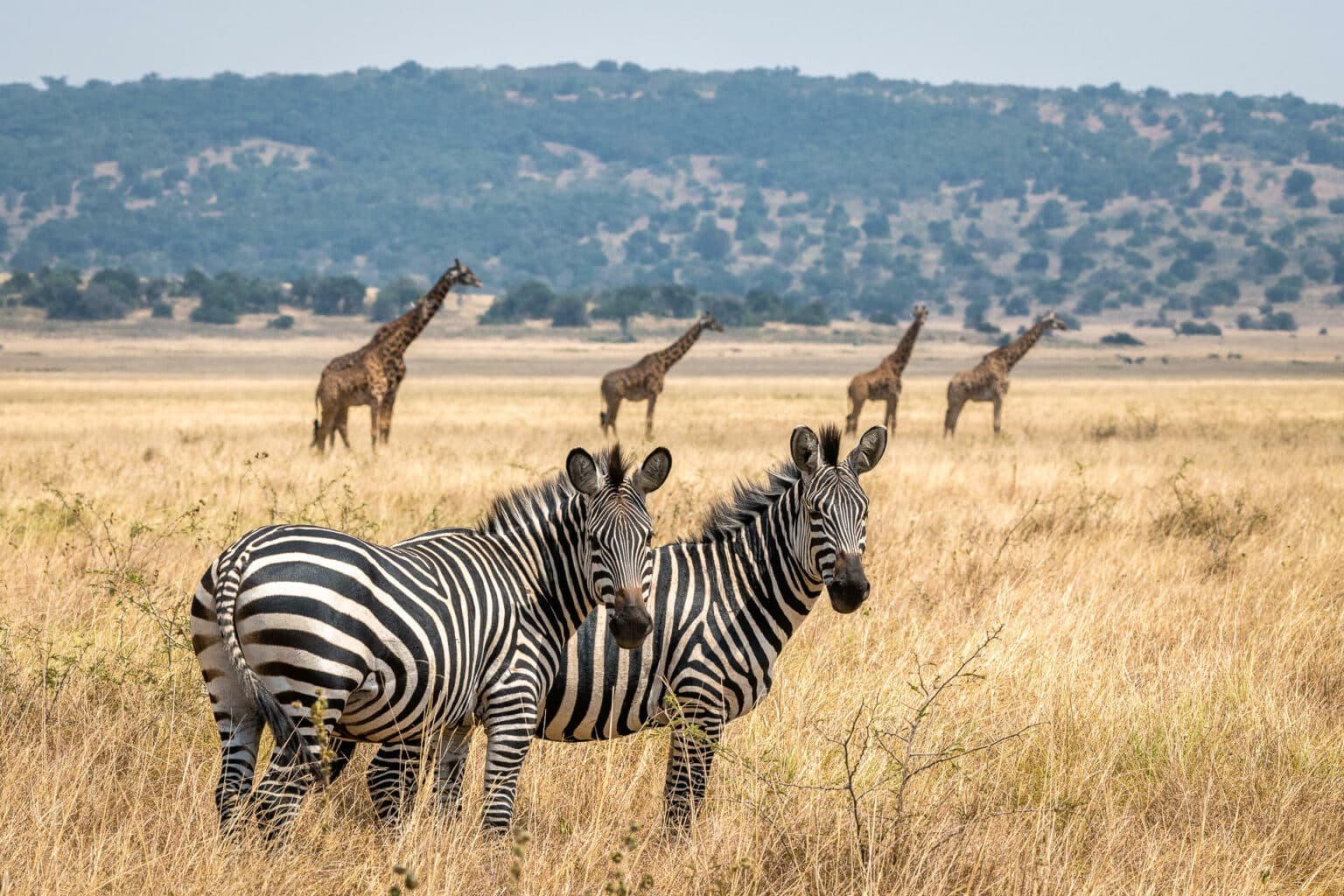
Reliably seen on most game drives: plains zebra, impala, warthog, olive baboon, vervet monkey, Cape buffalo in herds, hippo in the lakes, and giraffe — the park’s giraffe population is one of its most visible successes and animals are frequently encountered in the northern sectors.
Usually seen with a good guide and a full day: African elephant, topi, waterbuck, bushbuck, and Nile crocodile on the lake edges and riverbanks.
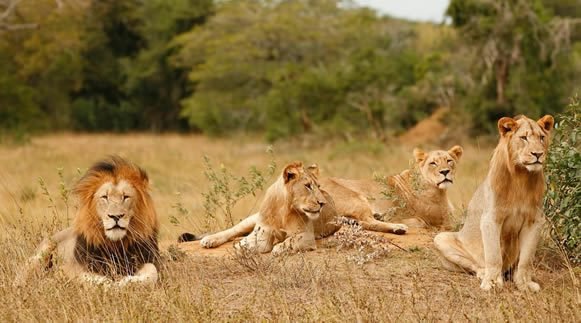
Present but not guaranteed: lion, leopard, black rhino, roan antelope, eland, sitatunga in the swamps, and hyena. Predators and rhino are the species that reward longer stays and a guide who knows the park’s recent sightings.
Population figures shift with rainfall, season and management decisions, and published counts vary by source. Confirm current status with the park or your operator rather than relying on a number in a blog post.
The Reintroduced Predators: Lions and Rhinos
Akagera’s two headline conservation stories are its lions and its rhinos, both of which were returned to the park after local extinction.
Lions were reintroduced in 2015, following a translocation from South Africa, and the population has since bred. Black rhinos were reintroduced in 2017, and white rhinos followed in a later translocation. These are genuinely significant conservation projects rather than marketing language, and they are the reason Akagera can now be discussed in the same breath as East Africa’s better-known savannah parks.
Two honest caveats. First, reintroduced populations start small, and sightings of lion and especially rhino are not comparable in frequency to a park like the Masai Mara — allocate more than one day if either is a priority. Second, rhino are managed and monitored closely, and access to them may be organised differently from a standard game drive. Ask specifically how rhino viewing is handled before you book rather than assuming it is a drive-by sighting.
Leopard are present in the park but are elusive everywhere, and a sighting should be treated as a bonus rather than an expectation.
Where the Animals Are: Habitats Within the Park
Akagera is not uniform, and understanding its zones helps set expectations for a day’s drive.
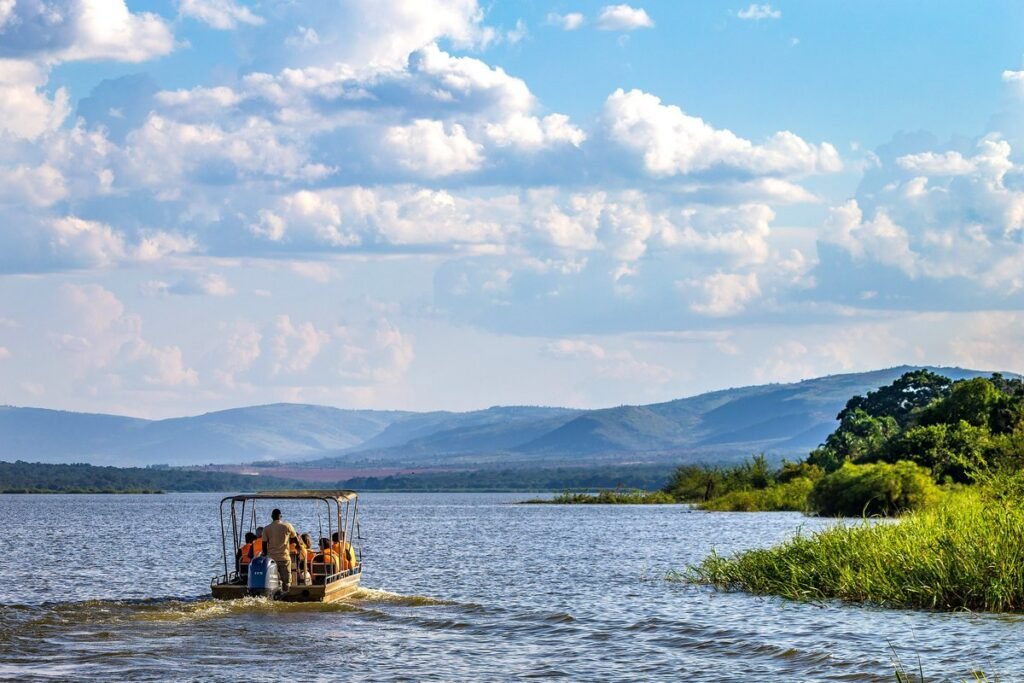
The lakes and wetlands — including Lake Ihema — hold hippo, crocodile and the park’s waterbird concentrations. This is the zone for a boat safari, and it delivers reliably.
Papyrus swamp holds sitatunga, a shy swamp antelope that most visitors never see, along with specialised birds found in few other places.
Open savannah and woodland in the northern and central sectors hold the bulk of the grazing herds — zebra, impala, topi, buffalo, giraffe — and the predators that follow them.
Hills and rocky outcrops suit klipspringer and klipspringer-like species, and give the elevated views that make the park’s scenery memorable.
Game density varies across these zones, and a guide’s routing on the day will reflect recent sightings rather than a fixed circuit. That is a reason to book with an operator who has current information from the park, not a reason to worry.
Birds: The Reason Some Travellers Come
Akagera’s bird list runs to several hundred species, with published counts varying between sources. For a savannah park it is exceptional, and for travellers who birdwatch it is a destination in its own right rather than a side interest.
The species most often cited as the park’s signature is the shoebill, a large and unusual wading bird associated with papyrus and wetland margins. Sightings are never guaranteed anywhere, and Akagera is no exception — but the wetland habitat is right, and boat safaris give the best chance. Other draws include African fish eagle, a range of kingfishers and herons, and raptors over the open country.
Birding rewards early starts and a guide who knows calls. If birds are a priority rather than an incidental pleasure, say so when enquiring — the routing and timing of a birding-focused day differ from a general game drive.
Activities and How They Differ
Akagera offers several distinct ways to see the park, and they are not interchangeable. Fees for park entry and activities are set by the park authorities and change periodically, so the table confirms what each activity involves and flags the pricing rather than quoting figures that may have moved.
| Activity | Where | What it is best for | Cost |
|---|---|---|---|
| Day game drive | Park-wide, with a guide | General big game — zebra, giraffe, buffalo, elephant, predators | Park fees and vehicle costs — confirm current rates when booking |
| Night drive | Designated sectors | Nocturnal species and predators, which day drives miss | Confirm current rates when booking |
| Boat safari | Lake Ihema | Hippo, crocodile and waterbirds, including a shoebill chance | Confirm current rates when booking |
| Guided walk | Designated areas only | Birds, tracks and smaller detail that a vehicle passes | Confirm current rates when booking |
| Gorilla trekking (for comparison) | Volcanoes NP — a different park in north-west Rwanda | Mountain gorillas, 1 hour with a habituated family | From $1,500 (no low-season discount) |
The gorilla row is included for one reason: most travellers considering Akagera are also weighing a gorilla permit, and the two costs are worth seeing side by side. They are separate products in separate parks, and neither substitutes for the other.
When to Go and How Long to Allow
Rwanda’s drier seasons, roughly June to September and December to February, give the best game viewing in Akagera — thinner vegetation, animals concentrated nearer water, and easier driving. The wetter months are greener and good for birds, but game is more dispersed and some tracks become difficult.
On time: one night gives a single afternoon and a single morning, which is enough for a general impression but thin for predators and rhino. Two nights is the realistic minimum for travellers who want lion or rhino to be a genuine possibility rather than a hope, and three nights suits photographers and birders. Availability of accommodation inside and near the park is limited, so this is not a place to leave until the last minute.
Entry formalities: Rwanda’s e-visa costs $50 for single entry or $70 for multiple entry and is applied for at irembo.gov.rw (verify current requirements before travel — rules change). Travellers combining Rwanda with Uganda and Kenya may want to weigh the East African Tourist Visa, at $100 for 90 days of multi-entry travel across the three countries, though it does not suit every routing — the Uganda visa requirements guide covers the trade-offs.
How to Book
Akagera works best as a two- or three-night addition to a Rwanda itinerary, either before or after a gorilla leg, and the two halves need to be sequenced around permit dates rather than around convenience. Afraeka Adventures is a licensed Ugandan operator based in Entebbe and Kampala, running safaris and primate trekking in Uganda, Rwanda, Kenya and Tanzania since 2018.
Contact Afraeka Adventures at info@afraekaadventures.com or use the enquiry form on our website. Useful starting points:
- Rwanda safaris — the wider picture
- Rwanda gorilla trekking — the forest half of a Rwanda trip
- Uganda and Rwanda combined gorilla tours — for travellers extending into Uganda
- East Africa multi-country safaris
- All tour packages
- Enquiry form